
Company Overview
At Pipe and Sections Pvt Ltd, we help contractors, builders, dealers, and project buyers get the latest tmt saria rate, transparent quotations, and fast delivery across India.
Most Recent Posts
- All Posts
- TMT Bars

Tags
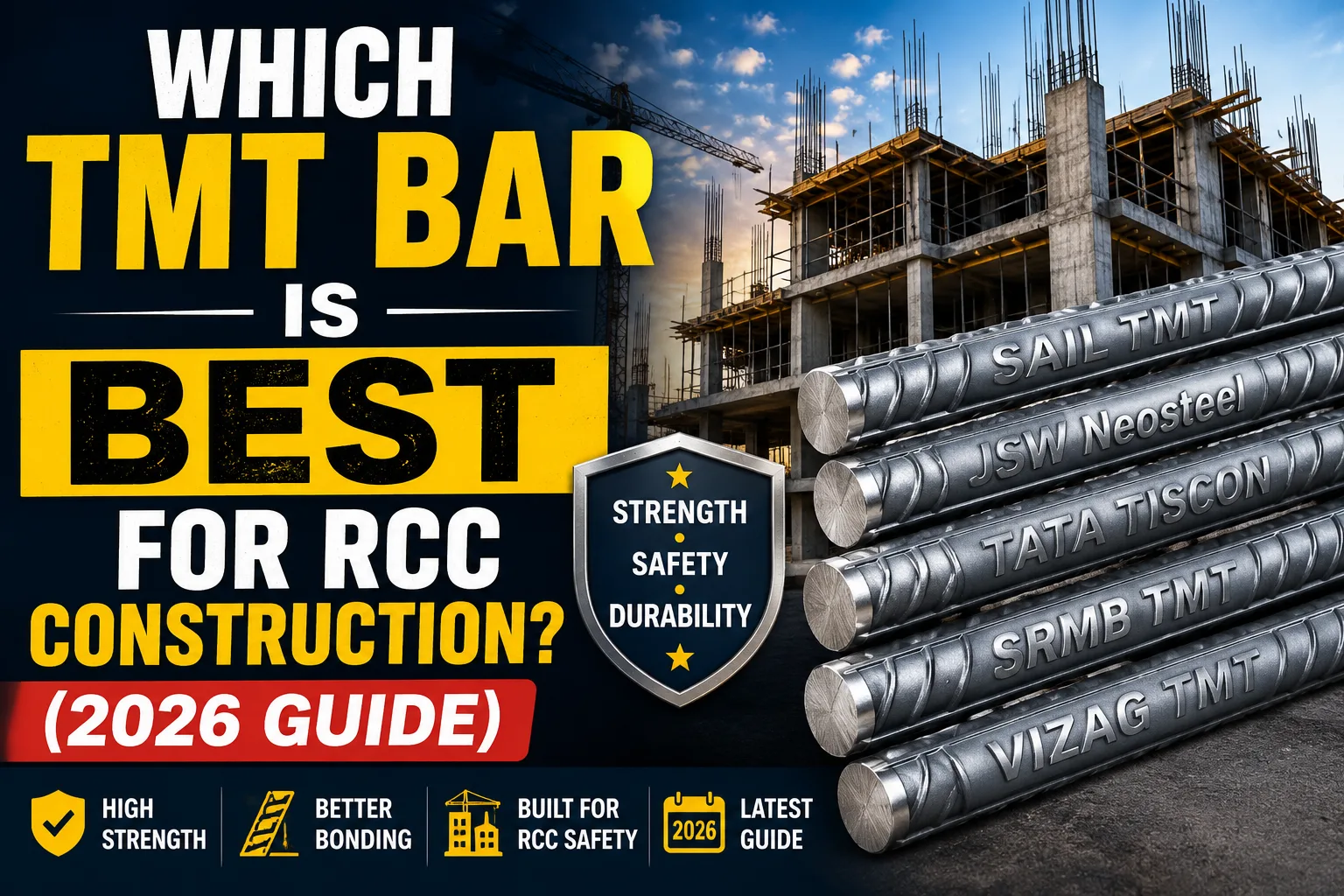
Which TMT Bar is Best for RCC Construction? (2026 Guide)
When it comes to RCC construction, Fe 500D and Fe 550D TMT bars are considered the best choices because they offer high strength, better ductility, improved load-bearing capacity, and stronger bonding with concrete. For residential RCC work, Fe 500D is widely preferred, while Fe 550D is more suitable for commercial and heavy structural RCC projects.
What is RCC Construction?
RCC stands for Reinforced Cement Concrete, a construction method where steel reinforcement bars are embedded inside concrete to improve tensile strength and structural durability.
Concrete is strong in compression but weak in tension. TMT bars solve this problem by handling tensile loads and improving the structural stability of buildings, slabs, beams, columns, foundations, and bridges.
This is why selecting the right TMT bar for RCC construction is one of the most important decisions in any project.
If you are planning residential, commercial, industrial, or infrastructure construction, choosing the correct TMT grade directly affects:
- Structural strength
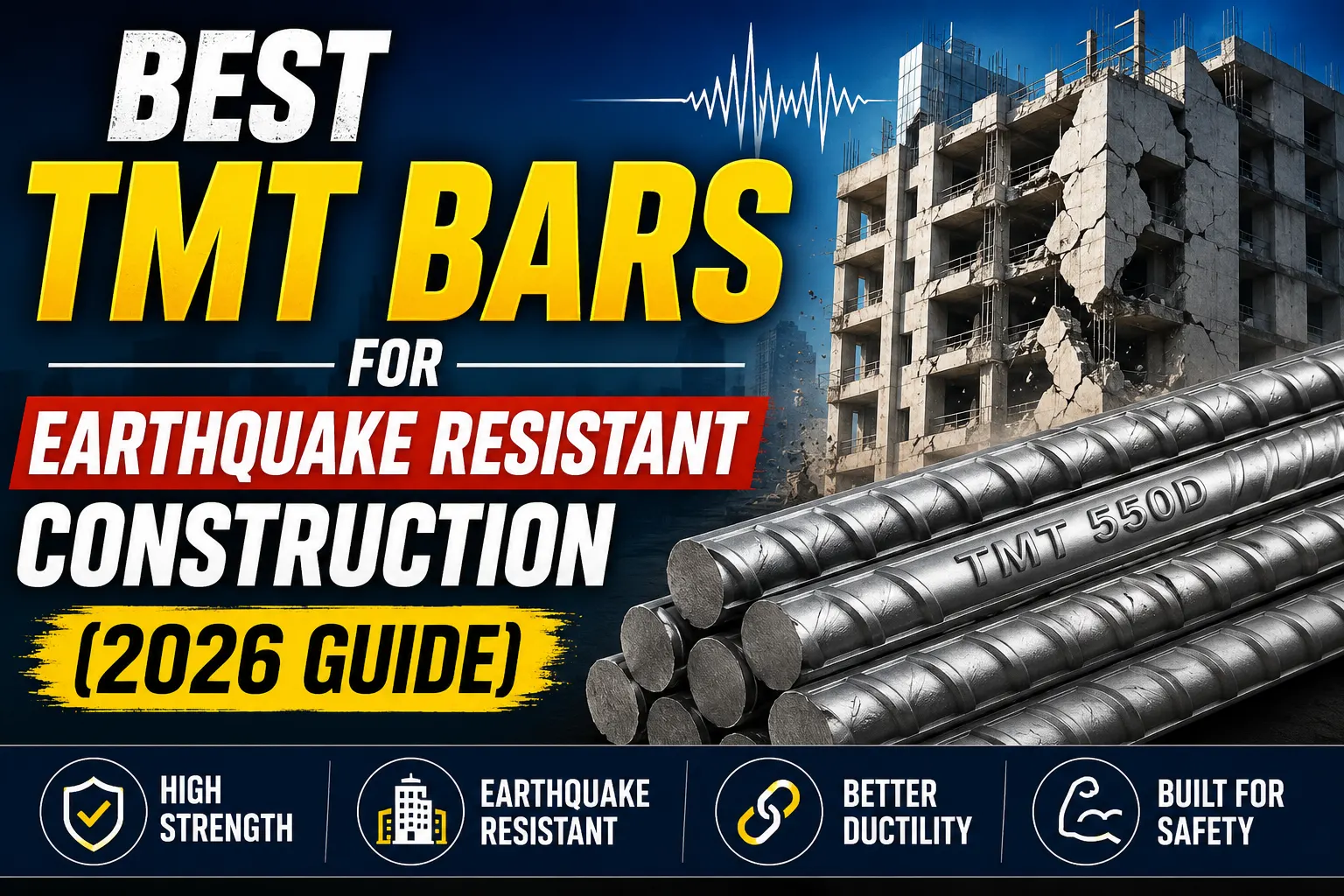
- Earthquake resistance
- Crack resistance
- Long-term durability
- Load-bearing capacity
- Safety standards
For buyers looking to understand TMT grades in detail, read our detailed guide on TMT Bar Grades Explained (Fe 500, Fe 550, Fe 550D & Fe 600).
Why TMT Bars Matter in RCC Construction
TMT bars are the backbone of RCC structures. Without proper reinforcement, concrete structures can crack, bend, or fail under heavy loads.
Modern TMT bars are manufactured using thermo-mechanical treatment technology, which provides:
- High tensile strength
- Better flexibility
- Corrosion resistance
- Strong bonding with cement
- Heat resistance
- Seismic resistance
In RCC structures, these properties are extremely important because reinforcement bars constantly face tension, load transfer, thermal expansion, and environmental stress.
This is why contractors and structural engineers prefer high-quality TMT bars for RCC applications.
For current market rates and size-wise pricing, check our TMT Bar Price Today in India (2026 Complete Guide).
Best TMT Grades for RCC Construction
Different RCC projects require different TMT grades depending on structural load and design requirements.
Fe 500 TMT Bars
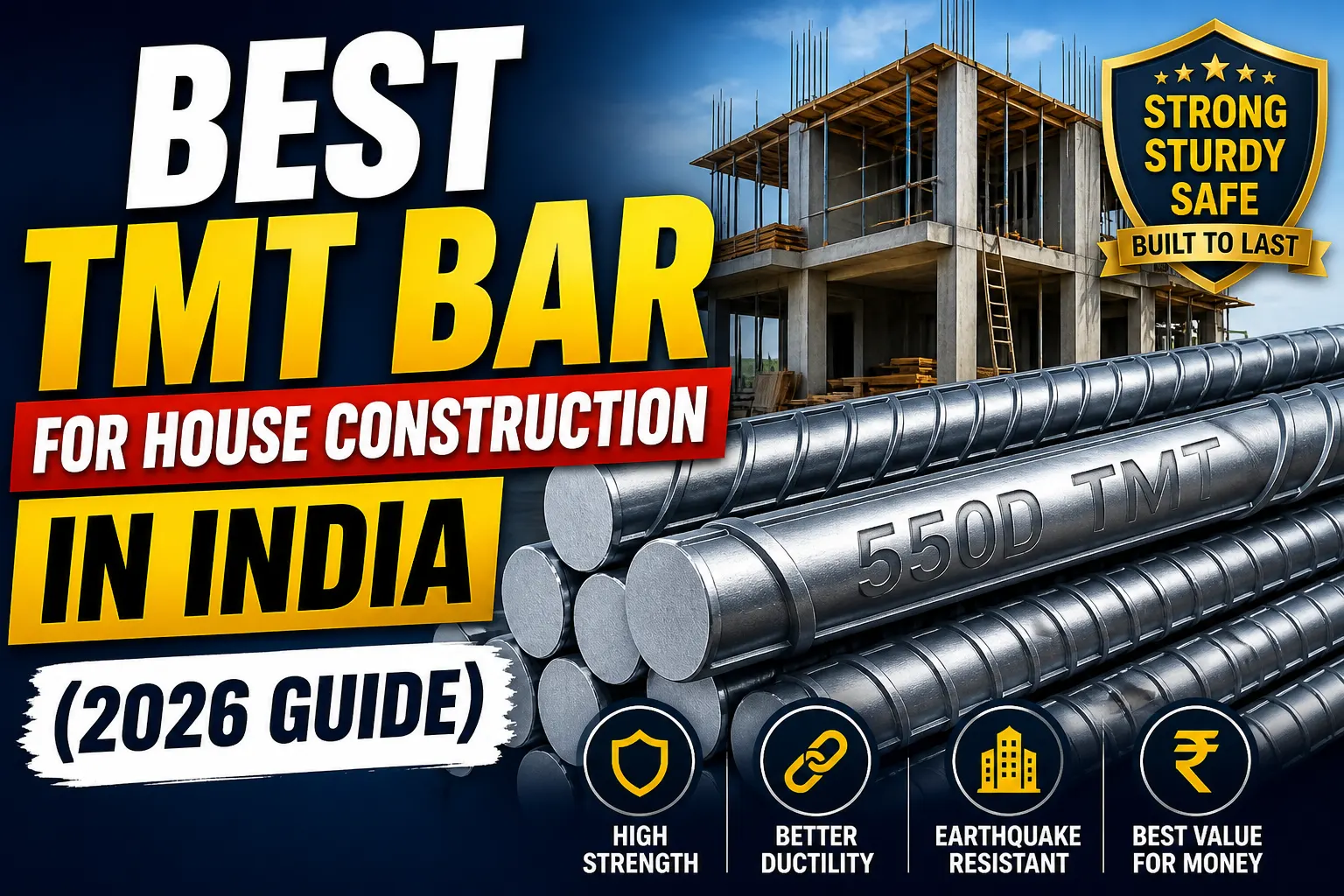
Fe 500 is one of the most commonly used grades for residential RCC construction.
Best for:
- House construction
- Slabs
- Beams
- Columns
- Small commercial projects
Benefits:
- Good strength-to-cost ratio
- Easily available
- Suitable for normal RCC work
- Cost-effective for residential structures
However, for projects requiring higher ductility and earthquake resistance, Fe 500D performs better.
Learn more in our detailed Fe 500 TMT Bars: Price, Uses & Best Applications guide.
Fe 500D TMT Bars
Fe 500D is considered one of the best TMT grades for RCC structures because it provides higher ductility along with strong load-bearing performance.
Best for:
- RCC slabs
- Earthquake-prone zones
- Residential foundations
- Multi-floor structures
Major advantages:
- Better elongation
- Improved flexibility
- Reduced crack formation
- Better seismic resistance
This grade is widely used in modern RCC construction because of its balanced strength and flexibility.
Fe 550 TMT Bars
Fe 550 offers higher yield strength compared to Fe 500.
Best for:
- Commercial RCC work
- Industrial projects
- Heavy structural frameworks
- High-load columns
Benefits:
- Higher tensile strength
- Reduced steel consumption
- Better structural performance
However, higher strength also means slightly lower ductility compared to D-grade variants.
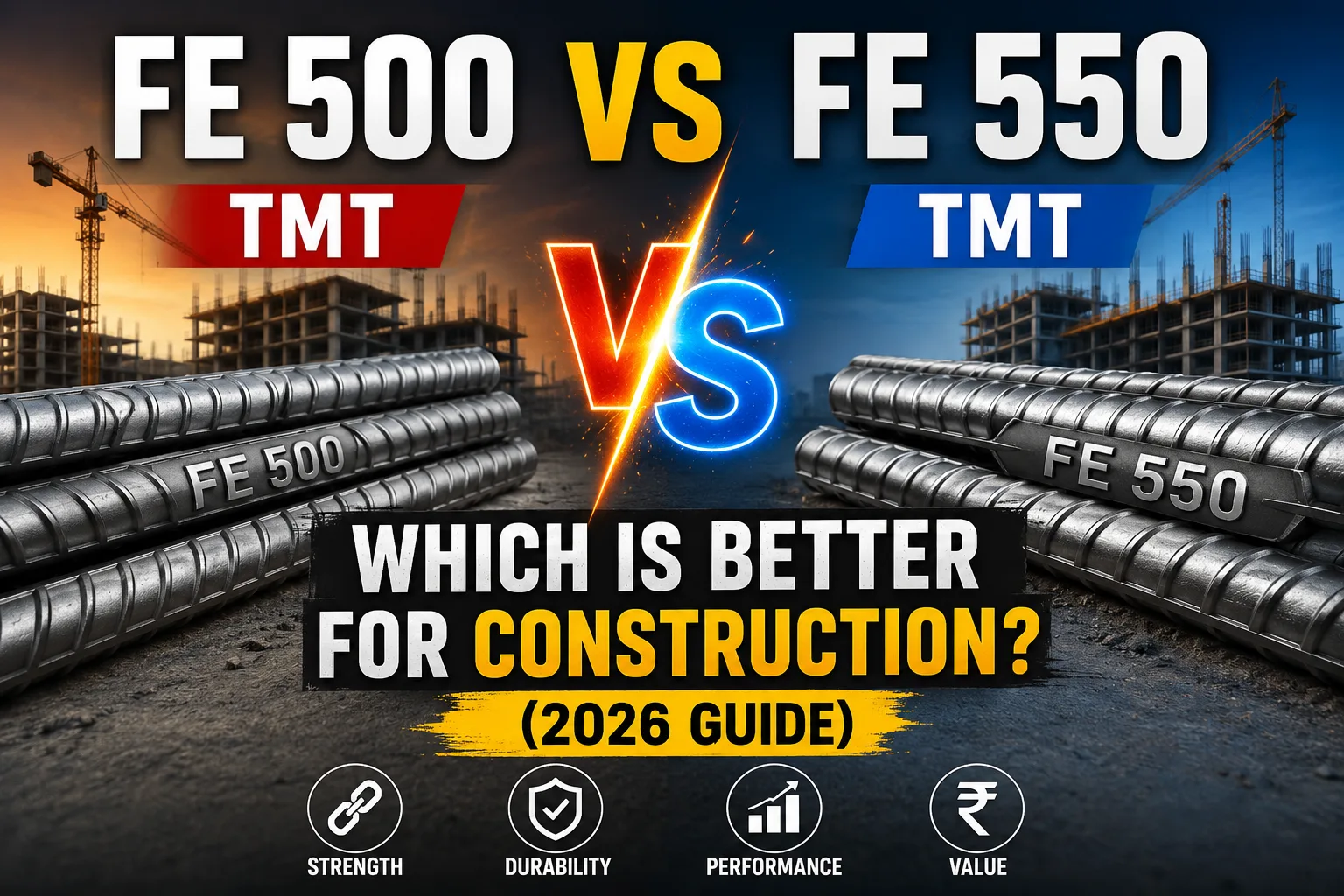
For comparison, read our detailed Fe 500 vs Fe 550 TMT: Which is Better? article.
Fe 550D TMT Bars
Fe 550D is among the most preferred grades for modern RCC structures.
Best for:
- High-rise buildings
- Commercial RCC structures
- Bridges
- Flyovers
- Industrial foundations
Why builders prefer it:
- High strength + high ductility
- Excellent seismic performance
- Better fatigue resistance
- Strong bonding with concrete
Contractors working on premium RCC projects often choose Fe 550D due to its long-term structural reliability.
You can also explore our detailed Fe 550D TMT Bars: Why Builders Prefer It guide.
Fe 500 vs Fe 550 for RCC Construction
One of the most common questions among contractors and buyers is whether Fe 500 or Fe 550 is better for RCC work.
Fe 500 vs Fe 550 Comparison Table
| Feature | Fe 500 | Fe 550 |
|---|---|---|
| Yield Strength | 500 MPa | 550 MPa |
| Ductility | Higher | Moderate |
| Cost | Lower | Slightly higher |
| Best Use | Residential RCC | Commercial RCC |
| Load Capacity | Medium | High |
| Flexibility | Better | Stronger |
Which One Should You Choose?
Choose Fe 500 if:
- You are building a house
- Budget optimization matters
- Project load is moderate
- RCC work is residential
Choose Fe 550 if:
- Structure has heavy load requirements
- Commercial strength is required
- Large spans are involved
- Industrial applications are planned
For modern RCC applications, many structural consultants now recommend Fe 500D or Fe 550D because they offer better balance between strength and flexibility.
Which TMT Size is Best for RCC Construction?
Choosing the right TMT size is equally important.
Different RCC components require different diameters depending on load and design calculations.
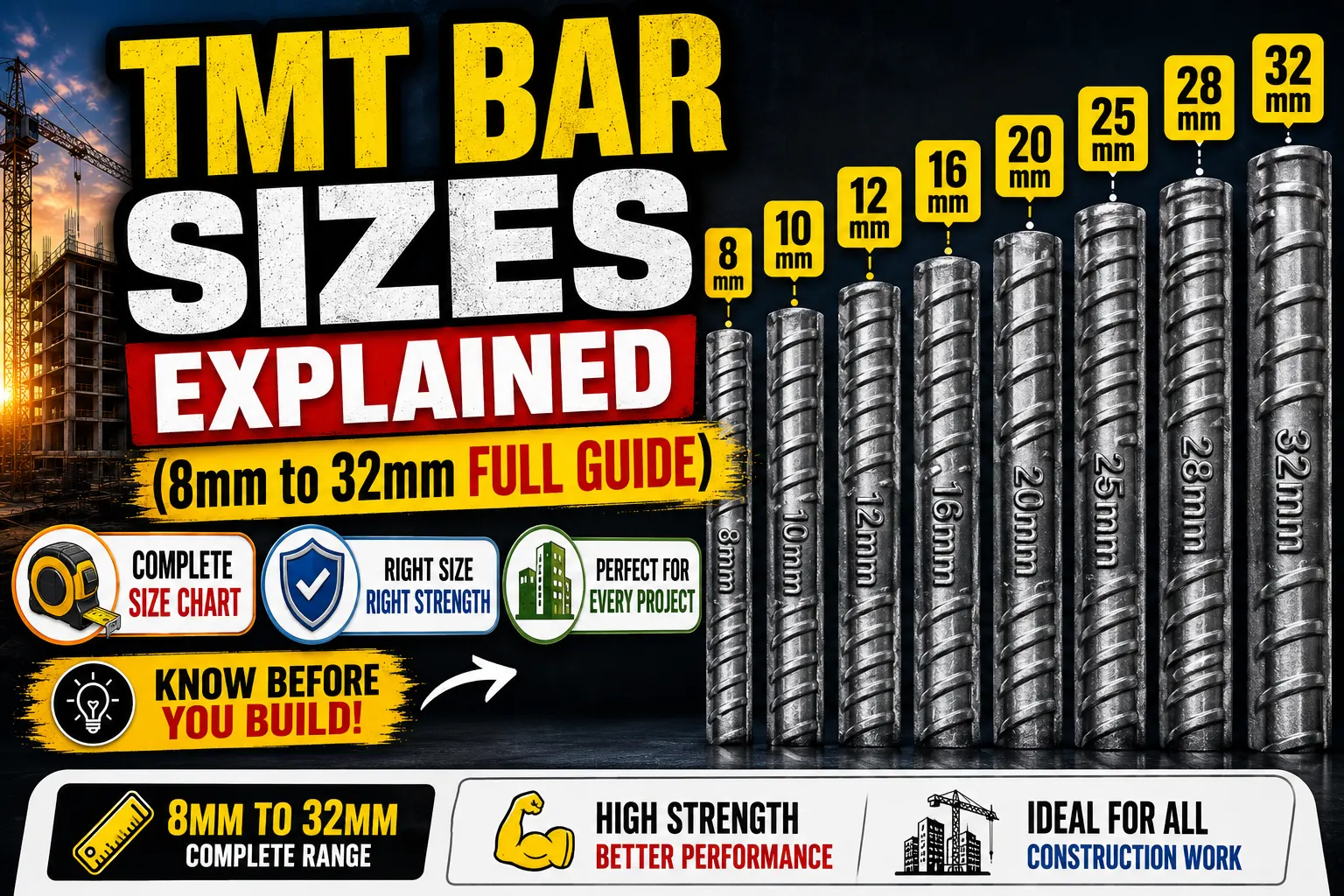
Common TMT Sizes Used in RCC
| TMT Size | Common RCC Application |
|---|---|
| 8mm | Stirrups, small slabs |
| 10mm | Residential slabs |
| 12mm | Beams & slabs |
| 16mm | Columns & footings |
| 20mm | Heavy RCC columns |
| 25mm+ | Industrial & infrastructure work |
For detailed weight and size calculations, check our TMT Bar Sizes & Weight Chart (8mm to 32mm Complete Guide).
How TMT Bars Improve RCC Strength
Modern TMT bars significantly improve RCC performance through:
1. Strong Concrete Bonding
The ribbed surface design helps TMT bars bind tightly with concrete, improving load transfer and reducing slippage.
2. Crack Resistance
High ductility bars reduce internal stress concentration, minimizing crack formation in RCC structures.
3. Earthquake Resistance
D-grade TMT bars absorb seismic stress better due to higher elongation properties.
This makes them ideal for earthquake-prone zones.
4. Better Load Distribution
High-quality TMT bars distribute structural load evenly throughout RCC elements.
5. Corrosion Resistance
Advanced TMT bars offer better corrosion resistance, improving RCC life span in humid and coastal environments.
Common RCC Reinforcement Mistakes
Many construction failures happen because of poor reinforcement practices rather than concrete quality itself.
1. Choosing Wrong TMT Grade
Using low-strength bars in heavy RCC structures can reduce structural safety.
2. Incorrect TMT Size Selection
Undersized bars may fail under heavy loads.
Oversized bars may unnecessarily increase project cost.
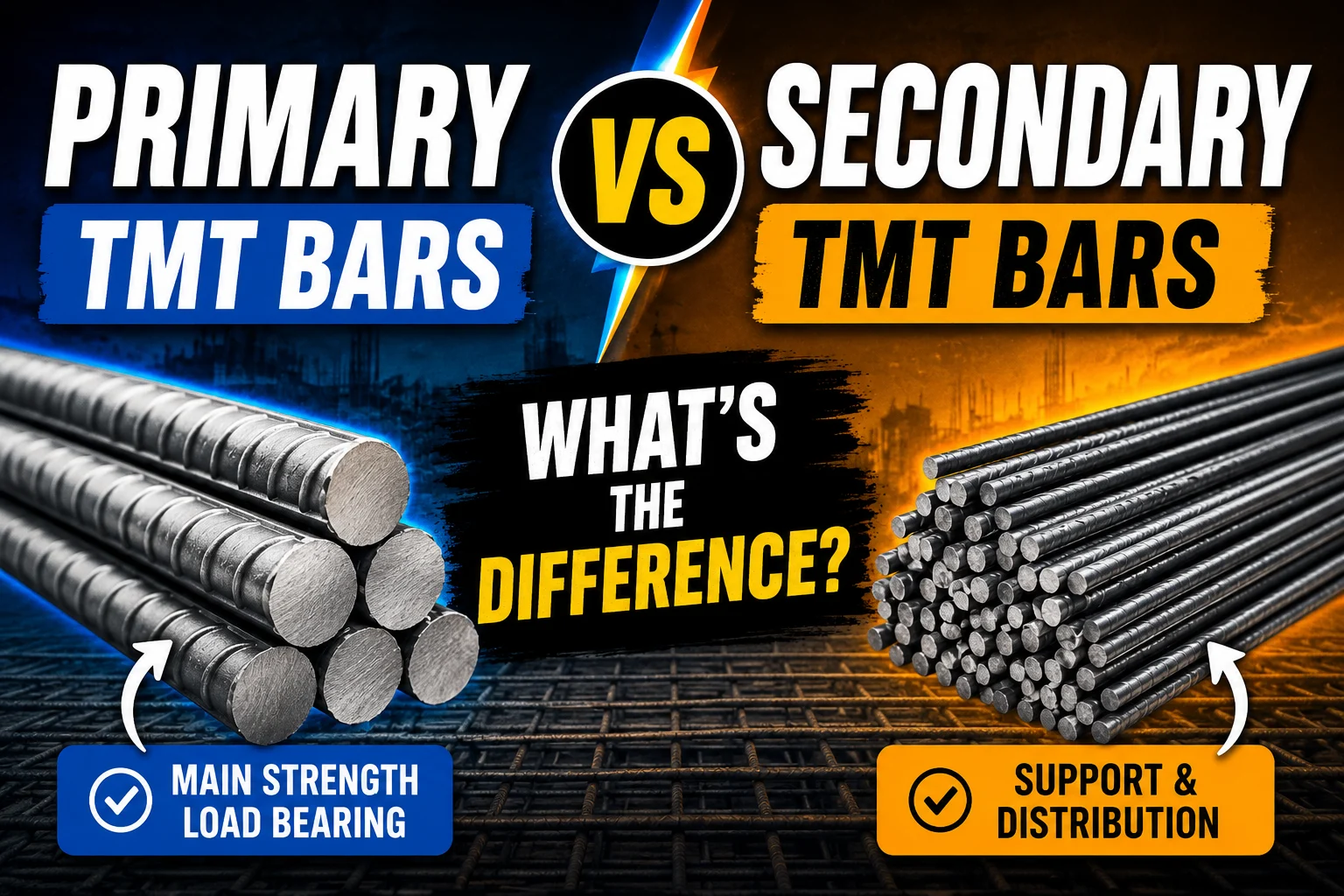
3. Using Secondary or Low-Quality TMT
Cheap secondary TMT bars often fail to meet standard strength requirements.
Read our detailed Primary vs Secondary TMT Bars: What’s the Difference? guide before purchasing.
4. Ignoring Weight Verification
Weight inconsistency can indicate poor-quality manufacturing.
Always verify standard weight charts before procurement.
5. Improper Bar Spacing
Incorrect reinforcement spacing weakens RCC structures and affects load distribution.
Latest RCC Construction Trends in 2026
Modern RCC construction is moving toward:
- Higher-strength TMT grades
- D-grade ductile bars
- Optimized steel consumption
- Earthquake-resistant reinforcement
- Corrosion-resistant reinforcement systems
Builders and contractors now prefer high-ductility grades because they improve structural performance while reducing long-term maintenance risks.
Buying Recommendation for RCC Construction
For Residential RCC Projects
Recommended:
- Fe 500D
- 10mm to 16mm sizes
Best for:
- Slabs
- Beams
- Columns
- Footings
For Commercial RCC Projects
Recommended:
- Fe 550
- Fe 550D
Best for:
- Commercial complexes
- Multi-floor buildings
- Industrial structures
For Infrastructure RCC Projects
Recommended:
- Fe 550D
- Fe 600
Best for:
- Bridges
- Flyovers
- Heavy foundations
- Infrastructure structures
Why Contractors Choose Pipe & Sections Pvt Ltd for RCC TMT Supply
Pipe & Sections Pvt Ltd supplies high-quality TMT bars for RCC construction projects across India.
The company supplies:
- Fe 500 TMT Bars
- Fe 500D TMT Bars
- Fe 550 TMT Bars
- Fe 550D TMT Bars
- Fe 600 TMT Bars
Key advantages:
- Transparent pricing
- Ready stock availability
- Bulk order support
- GST billing
- Fast dispatch
- Standard weight compliance
- Support for contractors & infrastructure projects
Whether you are working on residential RCC construction or large-scale commercial projects, choosing reliable TMT supply is critical for structural safety and project efficiency.
Final Conclusion
Choosing the right TMT bar for RCC construction is essential for structural safety, durability, and long-term performance. For most residential RCC projects, Fe 500D offers the best balance of strength, flexibility, and affordability. For commercial and infrastructure projects, Fe 550D and Fe 600 provide superior load-bearing performance and structural reliability.
With growing demand for stronger and safer RCC structures in 2026, builders and contractors are increasingly shifting toward high-ductility TMT grades for better reinforcement performance. If you are looking for reliable TMT supply with transparent pricing, bulk dispatch support, and multiple grades and sizes, Pipe & Sections Pvt Ltd supplies TMT bars for residential, commercial, industrial, and infrastructure RCC projects across India.
Frequently Asked Questions
Which TMT bar is best for RCC construction?
Fe 500D and Fe 550D are considered among the best TMT grades for RCC construction because they provide high strength along with excellent ductility and crack resistance.
Is Fe 500 good for RCC work?
Yes, Fe 500 is widely used for residential RCC work such as slabs, beams, and columns.
Which TMT size is best for RCC slabs?
10mm and 12mm TMT bars are commonly used for RCC slabs depending on structural design requirements.
Is Fe 550 better than Fe 500?
Fe 550 provides higher strength, while Fe 500 offers better flexibility and affordability. The ideal choice depends on project type.
Why are D-grade TMT bars preferred in RCC?
D-grade bars provide higher ductility and better earthquake resistance, making them ideal for modern RCC structures.
Strength, reliability, and excellence in every steel pipe and section we supply for your growth.
- +91 9310020802
- [email protected]
- 22 & 23, Apollo Market, Prakash Industrial Estate, Sahibabad - 201005, Ghaziabad (U.P.) INDIA.
Work Hours
- Mon-Sat 10:00AM -6:00PM
Explore the premium range of TMT bars from Pipe & Sections, engineered with advanced technology to deliver superior strength, exceptional durability.
© 2026 All Rights Reserved. Designed and Managed by SBS DIGITAL INFOTECH.