
Company Overview
At Pipe and Sections Pvt Ltd, we help contractors, builders, dealers, and project buyers get the latest tmt saria rate, transparent quotations, and fast delivery across India.
Most Recent Posts
- All Posts
- TMT Bars


Tags
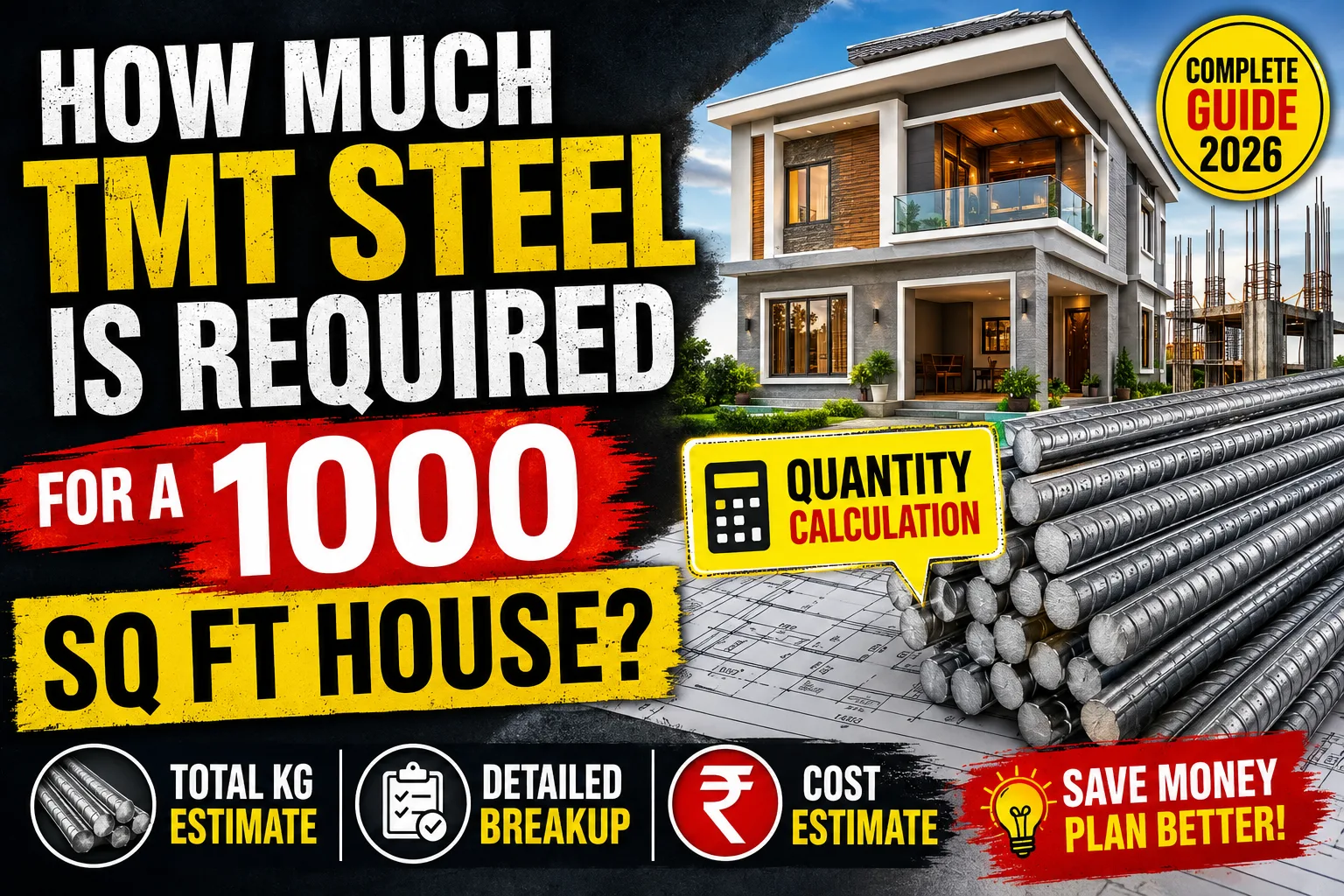
How Much TMT Steel is Required for a 1000 Sq Ft House?
The amount of TMT steel required for a 1000 sq ft house typically ranges between 3.5 to 5 metric tons depending on the number of floors, structural design, soil condition, slab thickness, and beam-column layout. In India, most residential RCC structures consume around 4 kg to 5 kg of steel per square foot for a single-floor construction. However, duplex homes, earthquake-resistant structures, and heavy-load buildings may require higher steel consumption. In this guide, we explain complete TMT steel quantity calculations, slab-wise estimation, TMT bar sizes, steel weight charts, cost estimation, and practical construction tips for accurate material planning.
Average TMT Steel Requirement for a 1000 Sq Ft House
The total tmt steel required for 1000 sq ft house mainly depends on the structural system used in construction. A load-bearing structure uses less steel compared to a fully RCC-framed structure.
For a standard residential house in India:
| House Type | Steel Required |
|---|---|
| Single Floor House | 3.5 – 4 MT |
| G+1 House | 4 – 5 MT |
| Heavy RCC Structure | 5 – 6 MT |
Key Factors Affecting Average Steel Usage
- Number of floors
- Soil bearing capacity
- Earthquake zone
- Column spacing
- Slab thickness
- Architectural design complexity
- Load distribution
A simple single-story house generally requires lower reinforcement, while duplex homes and commercial-style residential buildings require additional beams, columns, and slab reinforcement.
You can also read TMT Bar Price Today to estimate the latest market pricing before purchasing steel.
TMT Steel Calculation Formula
The most common method used by civil engineers for estimating steel quantity is:
Steel Quantity=Built Up Area×Steel Consumption Factor\text{Steel Quantity} = \text{Built Up Area} \times \text{Steel Consumption Factor}Steel Quantity=Built Up Area×Steel Consumption Factor
Understanding the Formula
Built-Up Area
Built-up area includes:
- Carpet area
- Wall thickness
- Balcony area
- Staircase area
Steel Consumption Factor
This represents the average steel required per square foot.
Typical consumption values:
- Residential house: 4–5 kg/sq ft
- Duplex structure: 5–6 kg/sq ft
- Commercial building: 6–8 kg/sq ft
Example Calculation
If the steel consumption is 4.5 kg/sq ft:
1000 × 4.5 = 4500 kg
4500 kg = 4.5 MT steel
This method gives a quick estimation during initial planning.
For better understanding of grades and structural performance, read Fe 500 TMT Bars Guide.
TMT Steel Required Per Square Foot
Steel consumption per square foot varies according to the structural load and building design.
| Construction Type | Steel Consumption |
|---|---|
| Residential House | 4–5 kg/sq ft |
| Duplex House | 5–6 kg/sq ft |
| Commercial Building | 6–8 kg/sq ft |
Residential Structures
Standard residential houses usually consume moderate quantities of steel because load distribution remains comparatively lower.
Duplex & Multi-Storey Houses
These require:
- Stronger columns
- Additional beams
- Higher reinforcement density
Seismic Zone Buildings
Houses constructed in earthquake-prone zones require additional reinforcement for safety and ductility.
This directly increases the steel consumption in residential building projects.
Floor-Wise TMT Steel Estimation for a 1000 Sq Ft House
Different structural elements consume different quantities of TMT bars.
Foundation Steel Quantity
The foundation carries the entire structural load. Weak soil conditions require additional footing reinforcement.
Approximate steel usage:
- 900–1200 kg
Column Steel Quantity
Columns are vertical load-bearing members.
Approximate steel usage:
- 700–1000 kg
Beam Steel Quantity
Beams transfer slab load to columns.
Approximate steel usage:
- 600–900 kg
Slab Steel Quantity
Slabs consume a significant quantity of reinforcement bars.
Approximate steel usage:
- 1200–1600 kg
Staircase Steel Quantity
Staircases require additional reinforcement for bending resistance.
Approximate steel usage:
- 150–300 kg
Detailed Steel Quantity Table
| Structure Part | Approx Steel Quantity |
|---|---|
| Foundation | 1000 kg |
| Columns | 850 kg |
| Beams | 750 kg |
| Slab | 1400 kg |
| Staircase | 200 kg |
Total Approximation:
- 4200 kg to 5000 kg
This is a standard range for a typical RCC residential structure.
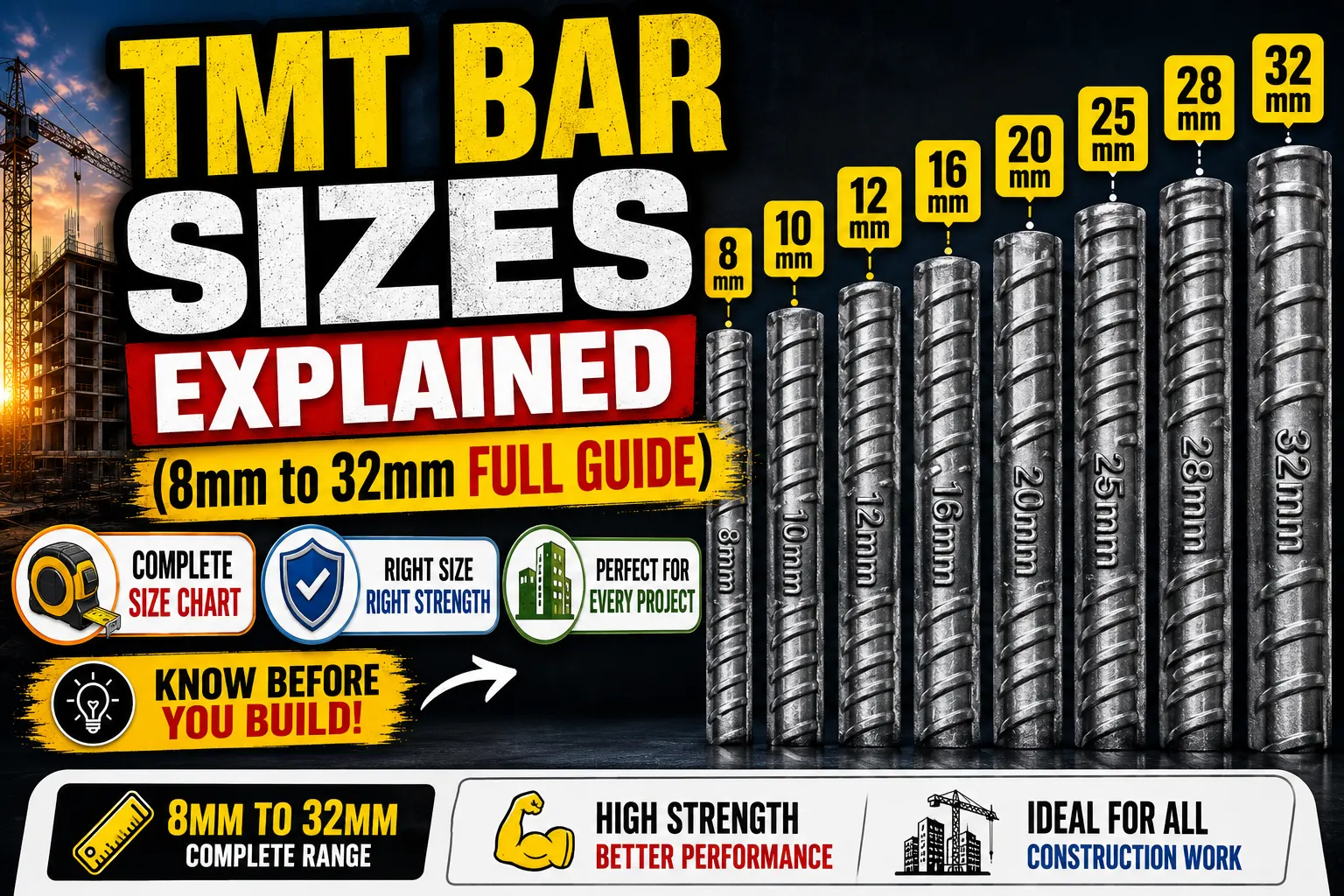
TMT Bar Sizes Used in House Construction
Different bar diameters are used for different structural members.
| TMT Bar Size | Common Use |
|---|---|
| 8mm | Slabs |
| 10mm | Slabs & Stirrups |
| 12mm | Beams |
| 16mm | Columns |
| 20mm | Heavy Load Structures |
8mm TMT Bars
Mostly used in:
- Slab mesh
- Distribution bars
10mm TMT Bars
Used for:
- Slabs
- Stirrups
- Small beams
12mm TMT Bars
Common in:
- Residential beams
- Moderate load sections
16mm TMT Bars
Preferred for:
- Columns
- High-load structural areas
20mm TMT Bars
Used in:
- Heavy RCC structures
- Multi-storey buildings
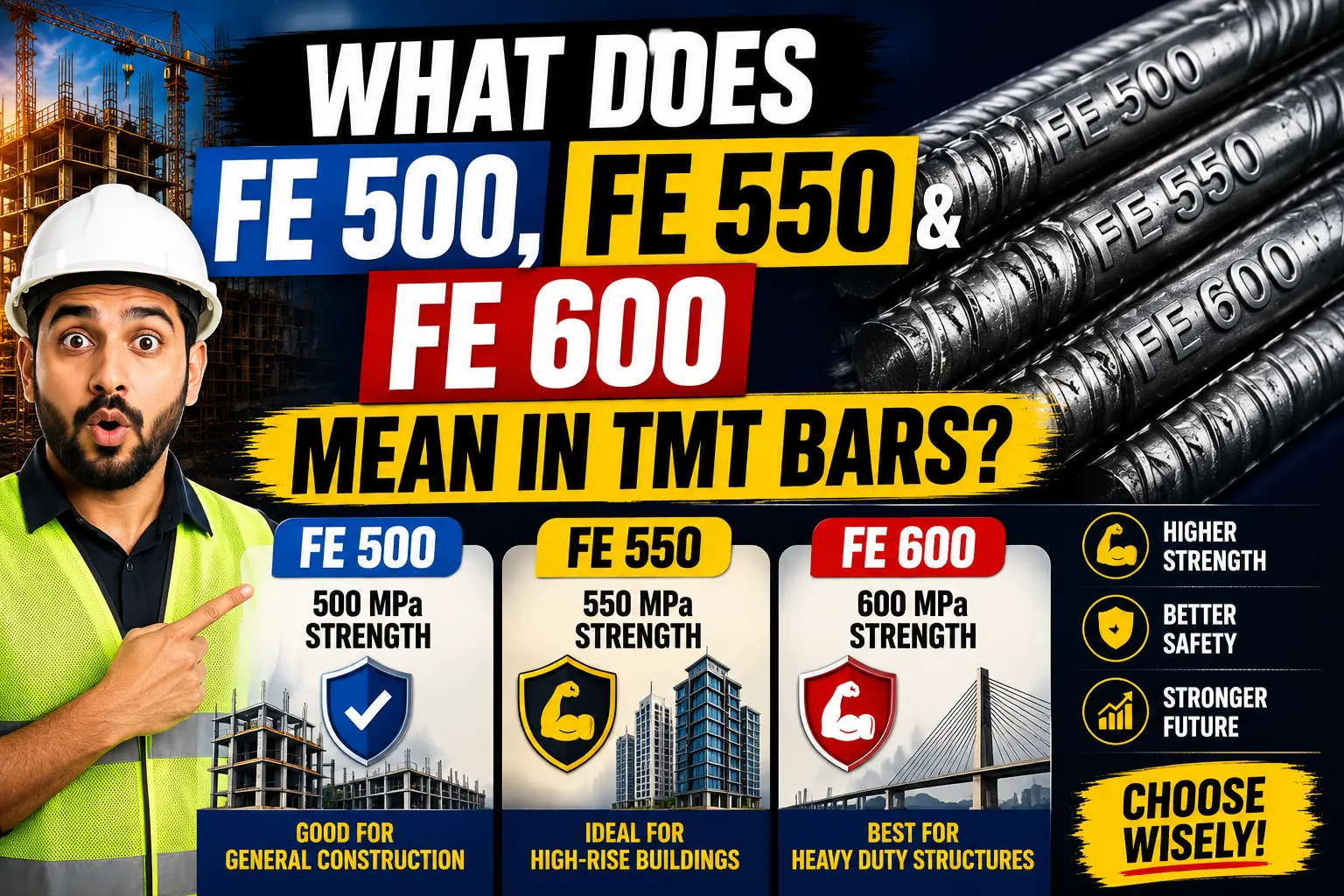
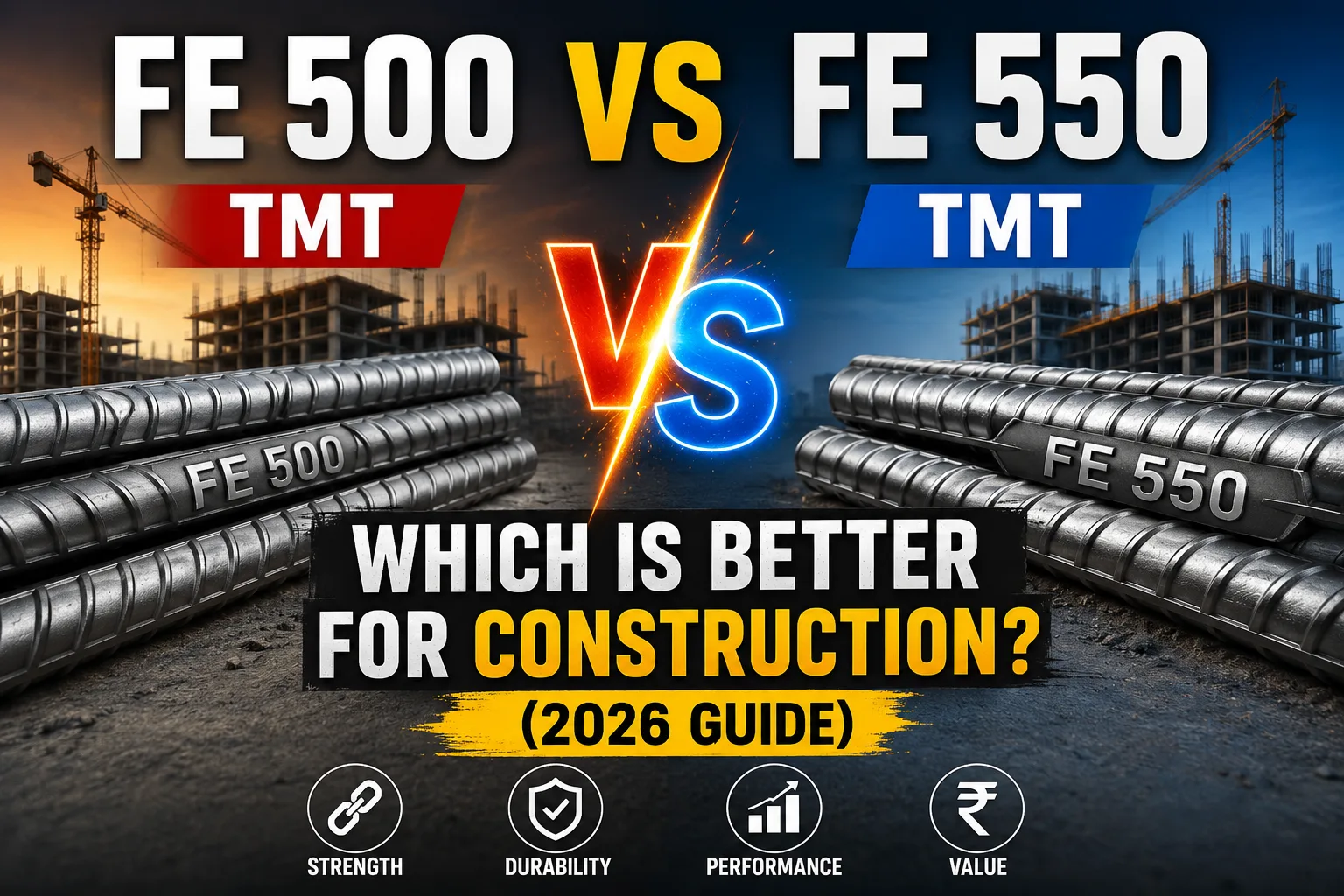
You can compare grades and strength differences in Fe 550 vs Fe 500 TMT Bars.
Best TMT Grade for 1000 Sq Ft House Construction
Choosing the right TMT grade directly impacts durability and structural strength.
Fe 500 TMT Bars
- High tensile strength
- Cost-effective
- Ideal for residential construction
Fe 500D TMT Bars
- Better ductility
- Improved earthquake resistance
- Reduced cracking
Fe 550 TMT Bars
- Higher strength
- Reduced steel consumption possible
- Suitable for heavier structures
Fe 550D TMT Bars
- High ductility + high strength
- Excellent seismic performance
- Premium residential projects
For most residential houses, Fe 500 and Fe 500D remain the preferred choices.
TMT Steel Weight Chart
Understanding TMT bar weight helps calculate the total steel quantity required for slabs, beams, columns, and foundations.
| Bar Size | Weight Per Meter |
|---|---|
| 8mm | 0.395 kg |
| 10mm | 0.617 kg |
| 12mm | 0.888 kg |
| 16mm | 1.58 kg |
| 20mm | 2.47 kg |
Why Weight Chart Matters
Weight charts help in:
- BOQ preparation
- Site estimation
- Material procurement
- Transportation planning
- Cost estimation
For detailed calculations, read TMT Bar Weight Chart.
Slab-Wise Steel Calculation Example
Let us calculate steel requirement for a 1000 sq ft slab.
Steel Required=Area×4.5 kg/sq.ft\text{Steel Required} = \text{Area} \times 4.5\,\text{kg/sq.ft}Steel Required=Area×4.5kg/sq.ft
Practical Example
Area = 1000 sq ft
Steel Consumption = 4.5 kg/sq ft
1000 × 4.5 = 4500 kg
4500 kg = 4.5 Metric Tons
Interpretation
This quantity includes:
- Slab reinforcement
- Beam reinforcement
- Column reinforcement
- Foundation steel
Actual consumption may vary according to:
- Structural design
- Architectural layout
- Seismic requirements
- Soil conditions
Factors Affecting TMT Steel Requirement
Several technical factors affect the final steel quantity.
Soil Condition
Weak soil requires:
- Larger footing
- More reinforcement
Number of Floors
More floors increase:
- Column size
- Beam depth
- Foundation load
Beam Spacing
Longer beam spans require additional reinforcement.
Seismic Zone
Earthquake-prone areas require:
- Extra stirrups
- Higher ductility steel
- Enhanced reinforcement detailing
Architectural Design
Complex layouts increase:
- Beam intersections
- Cantilever sections
- Reinforcement density
Slab Thickness
Thicker slabs require more steel.
Load Bearing Capacity
Heavy structures such as parking areas or commercial usage require higher reinforcement.
How to Reduce TMT Steel Wastage
Proper planning can significantly reduce wastage and save construction cost.
Proper Bar Cutting
Use optimized cutting schedules to minimize scrap.
Accurate BOQ
Detailed Bill of Quantity helps prevent over-ordering.
Lap Optimization
Reduce unnecessary overlaps through proper structural planning.
Site Planning
Proper stacking and organized reinforcement work reduce wastage.
Proper Storage
Protect TMT bars from:
- Corrosion
- Mud contamination
- Water exposure
For better material selection, read How to Check TMT Bar Quality.
TMT Steel Cost Estimation for 1000 Sq Ft House
Steel cost depends on:
- Market rate
- Brand
- Grade
- Transportation
- GST
Approximate steel rates fluctuate regularly.
| Steel Quantity | Approx Cost |
|---|---|
| 4 MT | ₹2.4 – ₹3.2 Lakhs |
| 5 MT | ₹3 – ₹4 Lakhs |
Important Cost Factors
Steel Price Fluctuation
Raw material prices directly impact steel cost.
Per Ton Pricing
Steel is generally sold per metric ton.
Transportation Charges
Distance from plant or dealer affects final pricing.
GST
Applicable taxes increase total procurement cost.
Always verify current rates before purchasing.
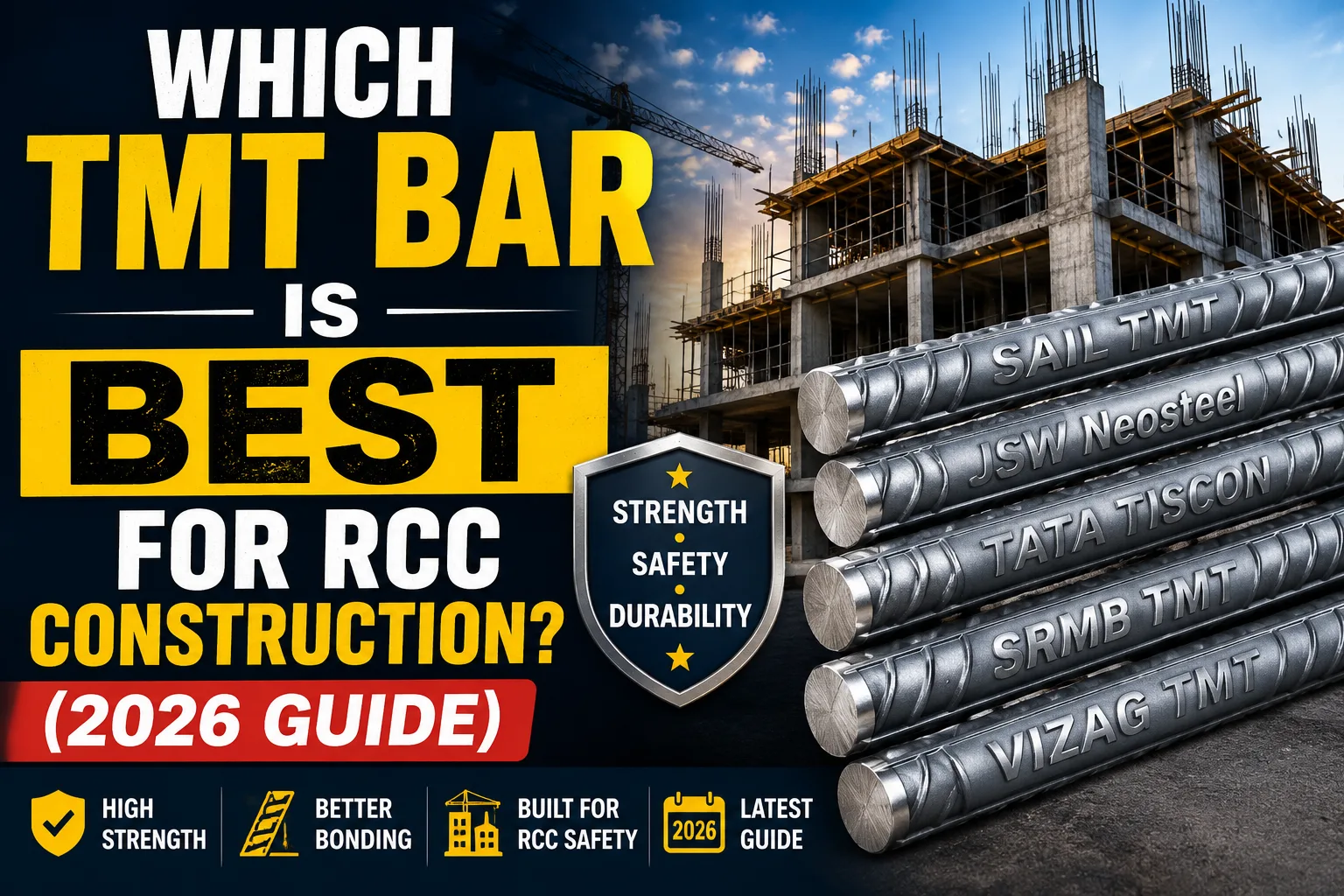
Which TMT Brand is Best for Residential Construction?
Some trusted TMT brands widely used in India include:
- Tata Tiscon
- Jindal Panther
- Kamdhenu
- JSW Neosteel
Factors to Consider While Choosing a Brand
- BIS certification
- Yield strength
- Ductility
- Corrosion resistance
- Brand reputation
- Availability
- Price consistency
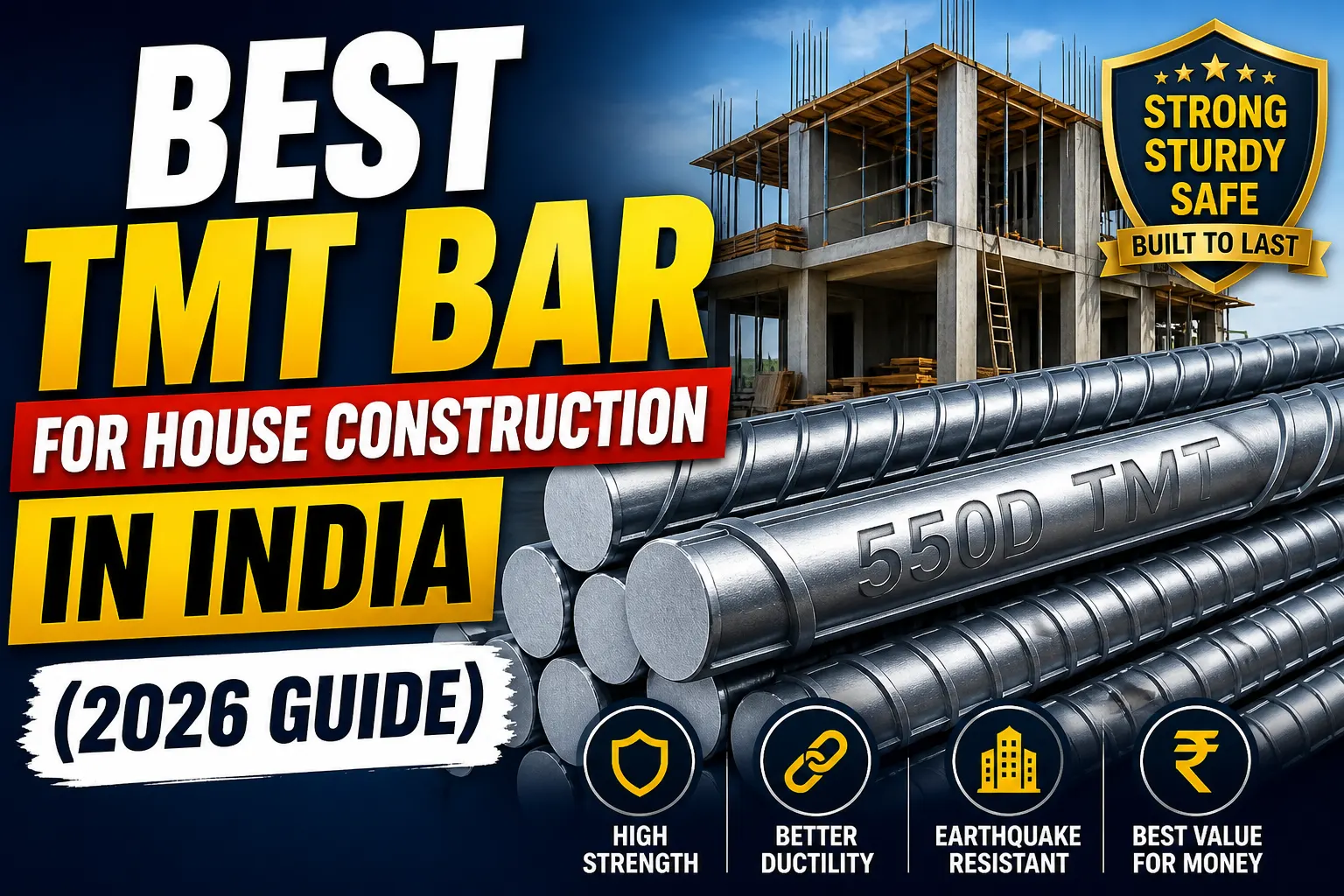
You can also explore Best TMT Bars for House Construction for detailed comparison.
Why TMT Steel Quality Matters in House Construction
High-quality TMT bars ensure long-term structural safety.
Structural Safety
Good-quality reinforcement prevents structural failure.
Crack Resistance
Ductile steel minimizes cracking during load movement.
Corrosion Resistance
Corrosion-resistant bars improve building lifespan.
Earthquake Performance
Ductile bars absorb seismic stress effectively.
Long-Term Durability
Quality reinforcement ensures:
- Lower maintenance
- Better structural integrity
- Higher durability
Common Mistakes in Steel Estimation
Underestimating Steel Quantity
Incorrect estimates delay projects and increase costs later.
Ignoring Wastage
Practical site wastage must always be included.
Wrong Bar Size Selection
Improper bar sizing weakens structural strength.
Poor Structural Planning
Improper layouts increase unnecessary steel usage.
Purchasing Low-Quality Steel
Cheap steel may fail quality standards and compromise safety.
Final Conclusion
The total tmt steel required for 1000 sq ft house generally ranges between 3.5 to 5 metric tons for standard residential construction. The exact quantity depends on structural design, number of floors, slab thickness, soil condition, and seismic requirements. Proper estimation is essential for cost control, structural safety, and material optimization.
Using high-quality TMT bars with accurate structural planning ensures:
- Better durability
- Higher safety
- Reduced cracking
- Improved earthquake resistance
For accurate construction steel quantity estimation, always consult a structural engineer before procurement and execution.
Frequently Asked Questions
How much TMT steel is needed for a 1000 sq ft house?
A typical 1000 sq ft RCC house requires around 3.5 to 5 metric tons of TMT steel depending on structure type and floor count.
How many tons of steel are required for house construction?
Residential houses generally require 4–5 kg steel per sq ft, which equals around 4–5 metric tons for a 1000 sq ft structure.
Which TMT bar size is best for slabs?
8mm and 10mm TMT bars are commonly used for slab reinforcement.
What is the average steel consumption per square foot?
Most residential RCC houses consume around 4–5 kg steel per sq ft.
Is Fe 500 enough for residential construction?
Yes, Fe 500 TMT bars are widely used for residential house construction due to their strength and affordability.
How much steel is required for a two-floor house?
A G+1 house generally requires around 4–5 metric tons or more depending on design complexity.
What is the steel cost for a 1000 sq ft house?
Steel cost may range between ₹2.5 lakh to ₹4 lakh depending on quantity and market rates.
How do engineers calculate steel quantity?
Engineers use:
- Structural drawings
- Bar bending schedules
- Steel consumption formulas
- RCC design calculations
Strength, reliability, and excellence in every steel pipe and section we supply for your growth.
- +91 9310020802
- [email protected]
- 22 & 23, Apollo Market, Prakash Industrial Estate, Sahibabad - 201005, Ghaziabad (U.P.) INDIA.
Work Hours
- Mon-Sat 10:00AM -6:00PM
Explore the premium range of TMT bars from Pipe & Sections, engineered with advanced technology to deliver superior strength, exceptional durability.
© 2026 All Rights Reserved. Designed and Managed by SBS DIGITAL INFOTECH.