Company Overview
At Pipe and Sections Pvt Ltd, we help contractors, builders, dealers, and project buyers get the latest tmt saria rate, transparent quotations, and fast delivery across India.
Most Recent Posts
- All Posts
- TMT Bars
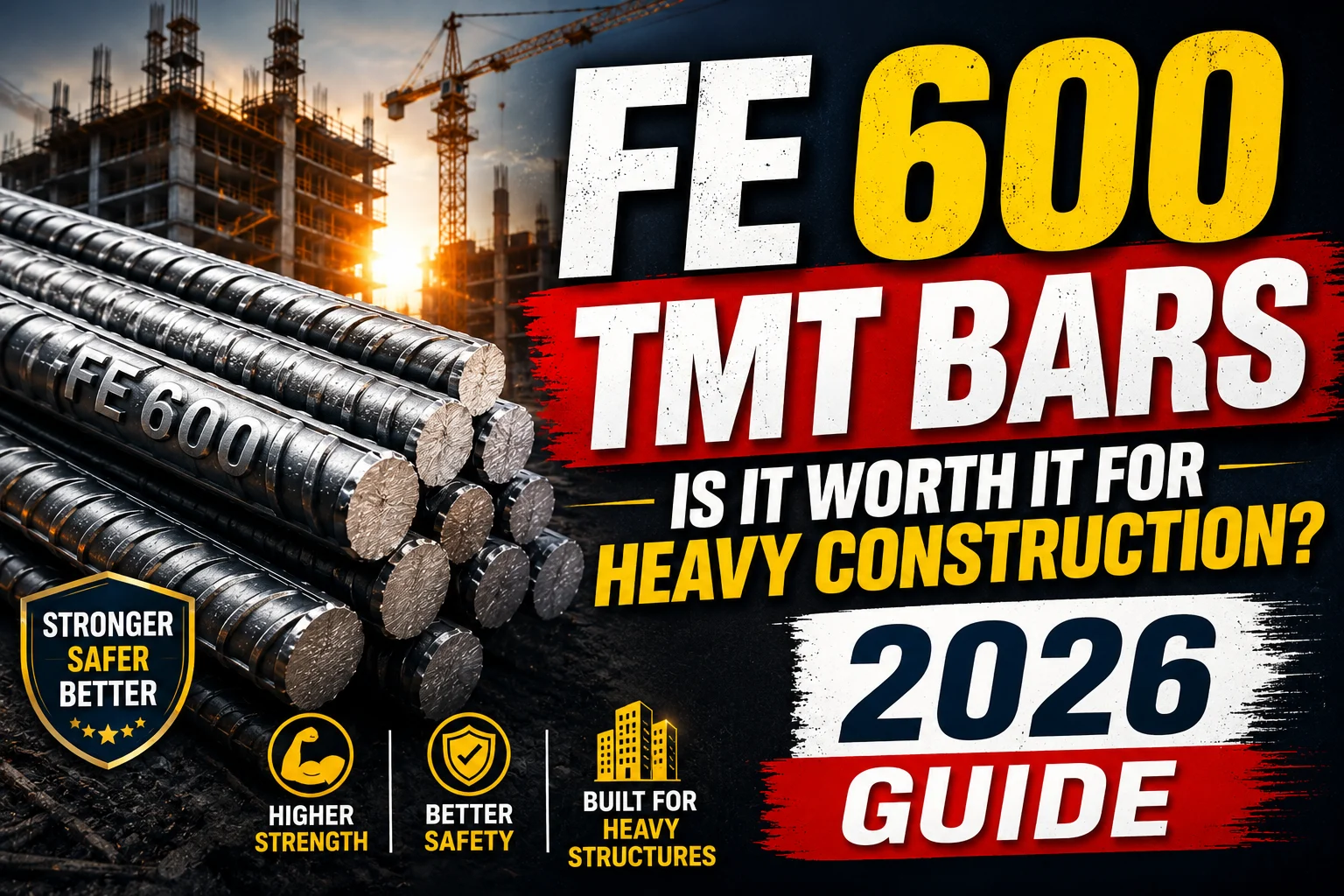
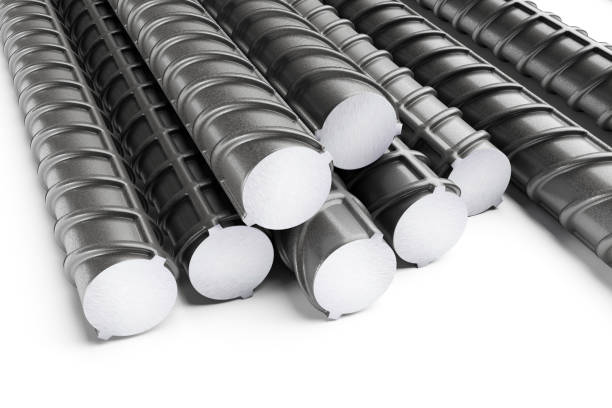
Tags
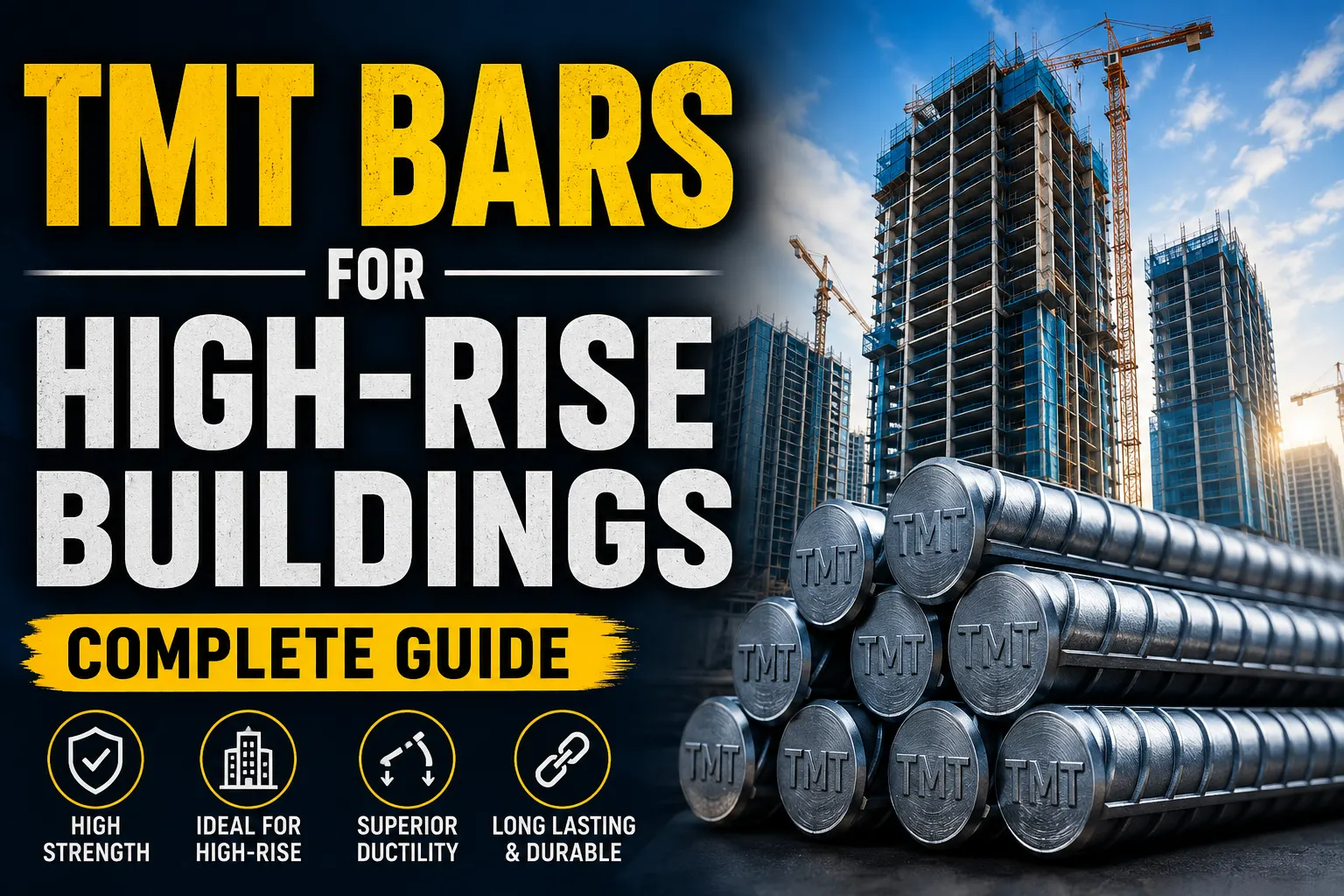
TMT Bars for High-Rise Buildings: Complete Guide
Introduction
High-rise buildings require high-strength, ductile, and structurally reliable TMT bars capable of handling massive vertical loads, wind pressure, seismic movement, and long-term structural stress. For most high-rise construction projects in India, Fe 500D, Fe 550D, and Fe 600 TMT bars are considered the most suitable choices due to their superior tensile strength, flexibility, and load-bearing performance. Modern high-rise structures are far more complex than standard residential buildings. The reinforcement used inside columns, beams, slabs, shear walls, and foundations directly affects the building’s stability, durability, and long-term safety. Choosing the wrong TMT grade or poor-quality reinforcement can lead to structural weaknesses, excessive cracking, corrosion issues, and reduced lifespan of the building.
This is why builders, EPC contractors, infrastructure companies, and structural consultants now prefer high-quality TMT bars supplied by trusted companies like Pipe & Sections Pvt Ltd., which provides bulk TMT supply support with transparent pricing, GST billing, ready stock availability, and dispatch support across India.
If you are planning a multi-storey residential tower, commercial building, industrial structure, or infrastructure project, understanding the right TMT bars for high-rise construction is extremely important.
Why TMT Bars Are Critical in High-Rise Buildings
High-rise buildings are continuously exposed to:
- Heavy vertical load
- Wind pressure
- Earthquake vibrations
- Thermal expansion
- Structural movement
- Dynamic load transfer
Ordinary reinforcement bars cannot efficiently handle these stress conditions for long durations. TMT bars are specifically engineered to provide:
- High yield strength
- Better elongation
- Excellent ductility
- Superior bonding with concrete
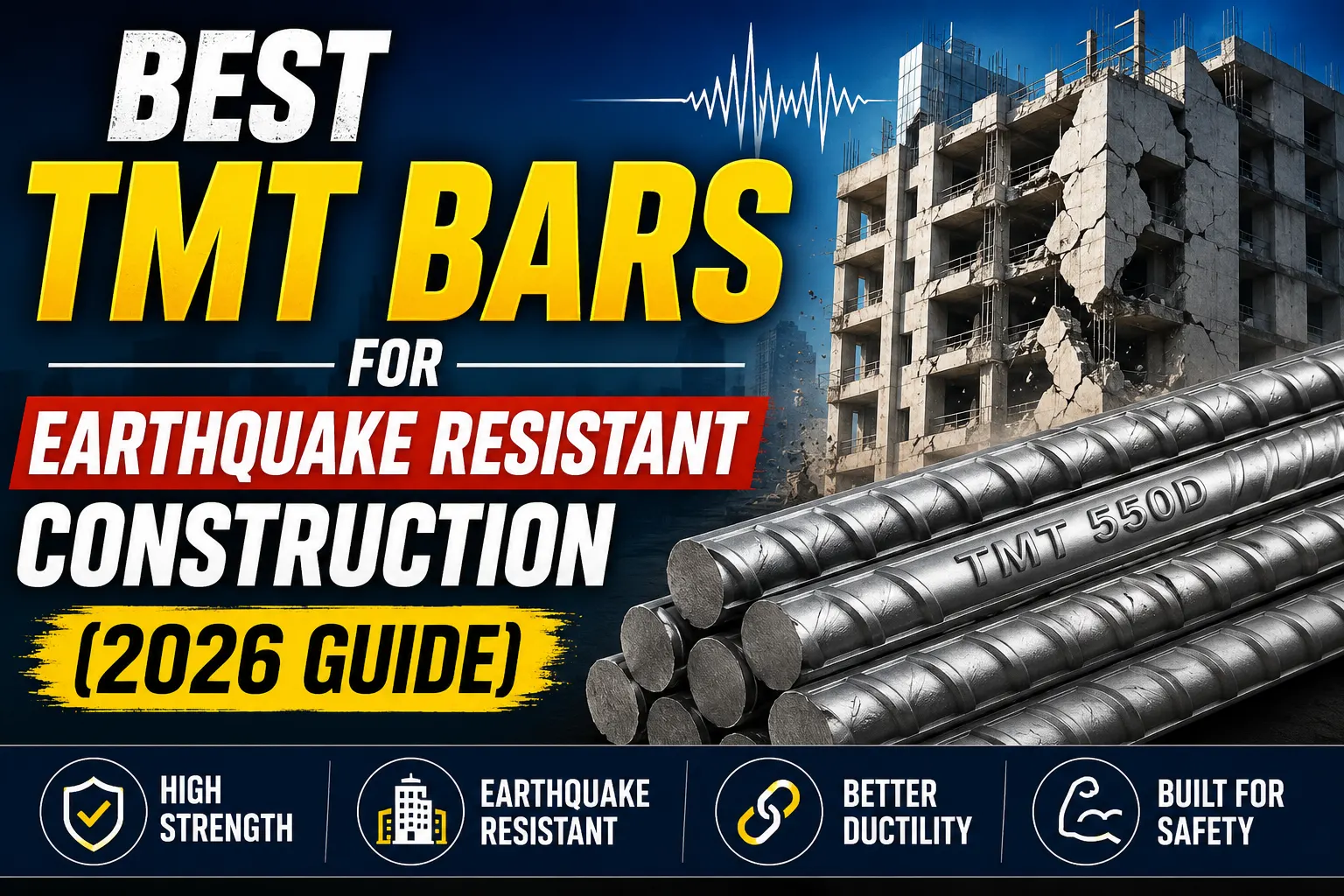
- Better seismic resistance
- Long-term structural durability
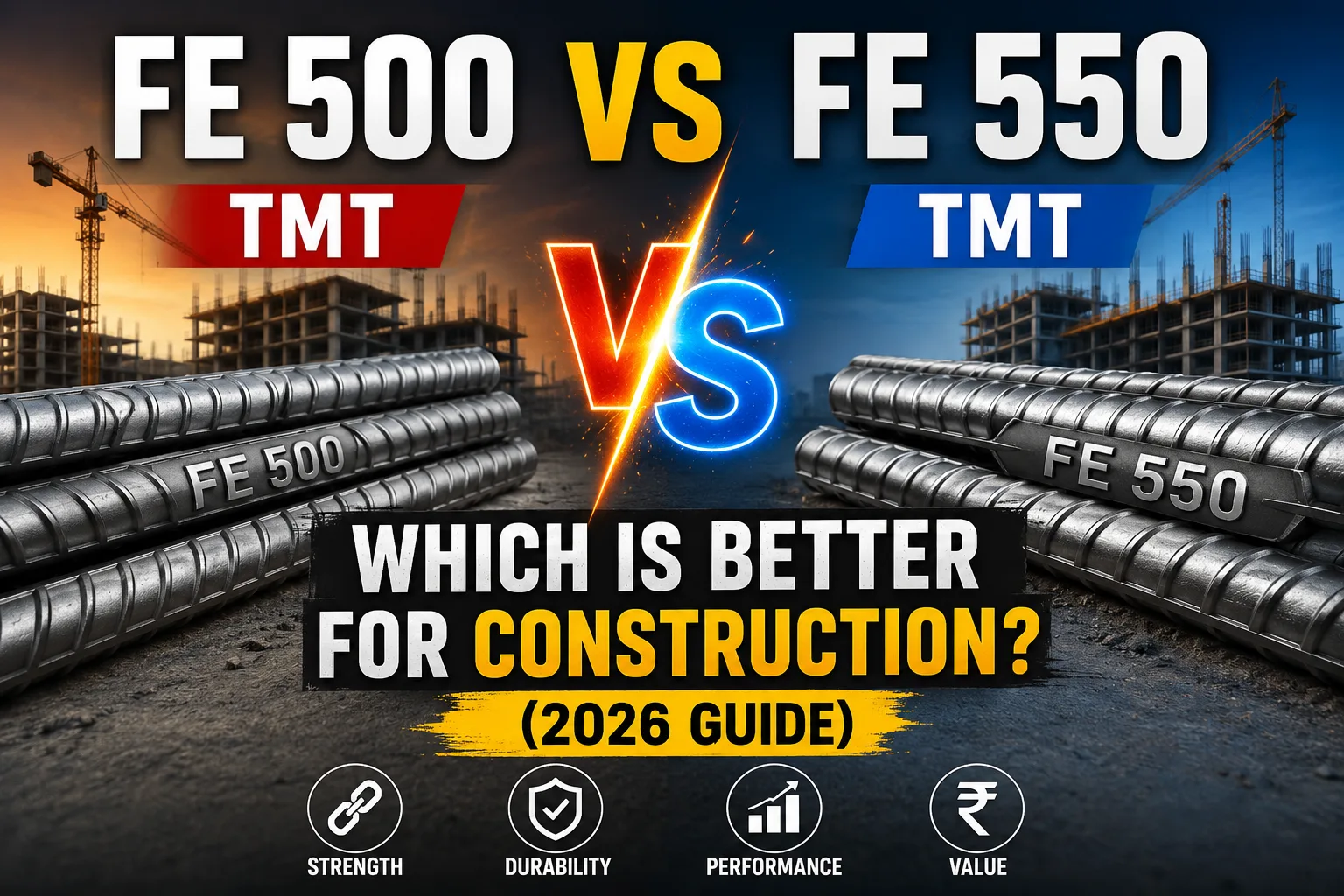
Because of these properties, TMT bars are now the standard reinforcement material for modern high-rise construction projects. For builders comparing different grades before procurement, reading Fe 500 vs Fe 550 TMT: Which is Better? can help understand strength and application differences between commonly used grades.
Structural Load Requirements in High-Rise Buildings
One of the biggest challenges in high-rise construction is load distribution.
As the building height increases, the pressure transferred to lower columns and foundations increases significantly. This means reinforcement bars must withstand:
- Compression forces
- Tensile stress
- Lateral movement
- Dynamic load shifts
- Structural vibration
The taller the building, the stronger and more ductile the reinforcement must be.
Major Structural Zones Requiring Strong Reinforcement
1. Foundation Reinforcement
The foundation carries the entire structural load of the building.
High-rise foundations require:
- Heavy reinforcement density
- High-strength TMT bars
- Corrosion resistance
- Long-term durability
2. Column Reinforcement
Columns are the primary vertical load-bearing members.
Weak columns can compromise the entire structure.
3. Beam Reinforcement
Beams transfer slab load to columns.
Improper beam reinforcement may cause:
- Cracks
- Deflection
- Structural instability
4. Shear Walls
High-rise buildings often use shear walls for earthquake resistance.
These walls require:
- Ductile reinforcement
- Strong concrete bonding
- High tensile strength
5. Slab Reinforcement
Floor slabs distribute load evenly throughout the structure.
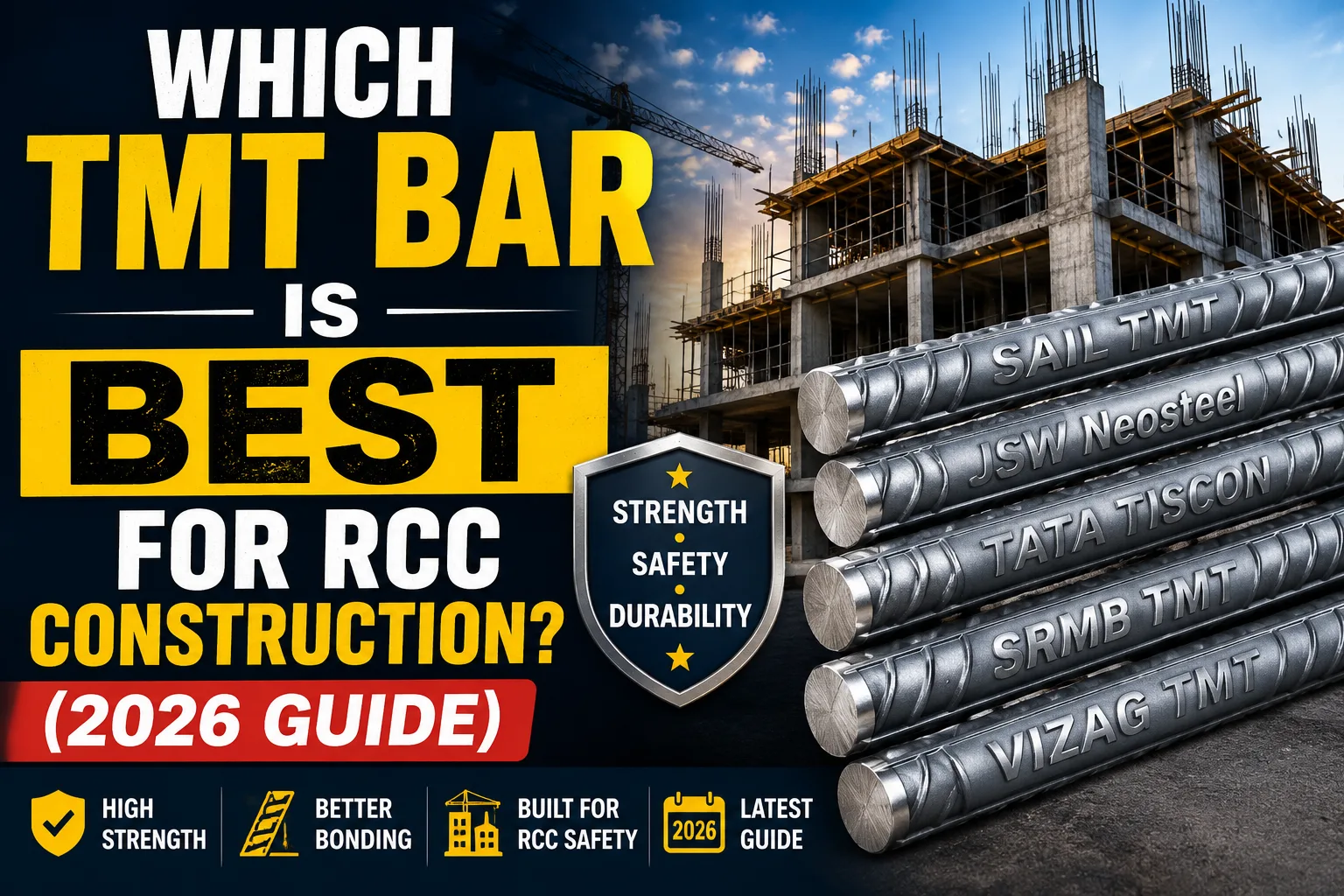
Choosing the correct TMT size and grade is essential for slab performance. Builders planning slab and RCC reinforcement should also read Which TMT Bar is Best for RCC Construction? for better grade selection guidance.
Recommended TMT Grades for High-Rise Buildings
Not all TMT grades are suitable for tall structures.
Modern high-rise buildings generally use:
| TMT Grade | Suitable For | Strength Level |
|---|---|---|
| Fe 500D | Residential towers | High |
| Fe 550D | Commercial high-rises | Very High |
| Fe 600 | Infrastructure & mega projects | Ultra High |
Fe 500D TMT Bars for High-Rise Buildings
Fe 500D bars are widely used in residential towers and medium-height structures because they provide:
- Excellent ductility
- Good elongation
- Strong earthquake resistance
- Better flexibility
The “D” in Fe 500D indicates higher ductility, making it safer for seismic zones and dynamic load conditions.
Best Applications
- Residential apartments
- Multi-storey housing
- Mid-rise structures
- Seismic zones
For detailed grade understanding, read Fe 550D TMT Bars: Why Builders Prefer It.
Fe 550D TMT Bars for Commercial Towers
Fe 550D bars are increasingly preferred for:
- Commercial towers
- IT parks
- Malls
- Industrial structures
- High-load RCC structures
They offer:
- Higher yield strength
- Better load-bearing capacity
- Superior fatigue resistance
- Improved structural stability
Why Builders Prefer Fe 550D
- Reduced steel quantity requirement
- Higher structural efficiency
- Better performance in tall structures
- Improved crack resistance
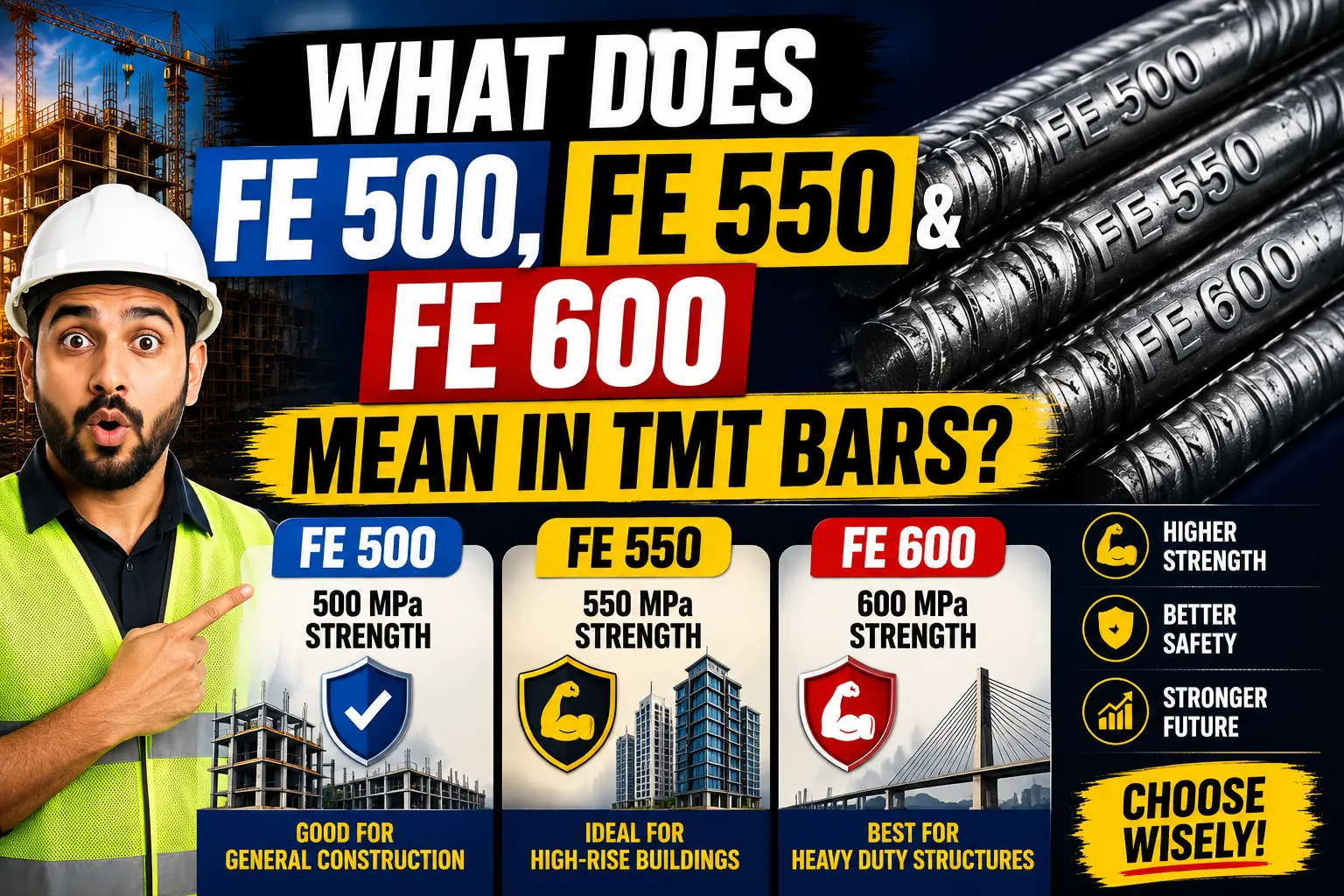
For detailed product information, buyers can also explore TMT Bar Grades Explained (Fe 500, Fe 550, Fe 550D & Fe 600).
Fe 600 TMT Bars for Mega Structures
Fe 600 bars are generally used in:
- Ultra high-rise towers
- Bridges
- Metro projects
- Flyovers
- Infrastructure structures
These bars provide:
- Extremely high tensile strength
- Maximum load-bearing performance
- Reduced reinforcement congestion
However, proper structural engineering design is mandatory when using Fe 600 bars.
Column Reinforcement Guide for High-Rise Buildings
Columns are among the most important structural elements in high-rise construction. A high-rise building may contain hundreds of vertical columns carrying enormous loads from:
- Slabs
- Beams
- Walls
- Roof structures
- Occupancy loads
Recommended TMT Sizes for Columns
| Building Type | Recommended Size |
|---|---|
| Residential Towers | 12mm – 20mm |
| Commercial Buildings | 16mm – 25mm |
| High-Rise Infrastructure | 20mm – 32mm |
Important Column Reinforcement Factors
1. Proper Anchorage
Incorrect anchorage weakens structural stability.
2. Adequate Cover
Concrete cover protects reinforcement from corrosion.
3. Ductility
Ductile bars absorb seismic energy better.
4. Correct Bar Spacing
Improper spacing affects load distribution.
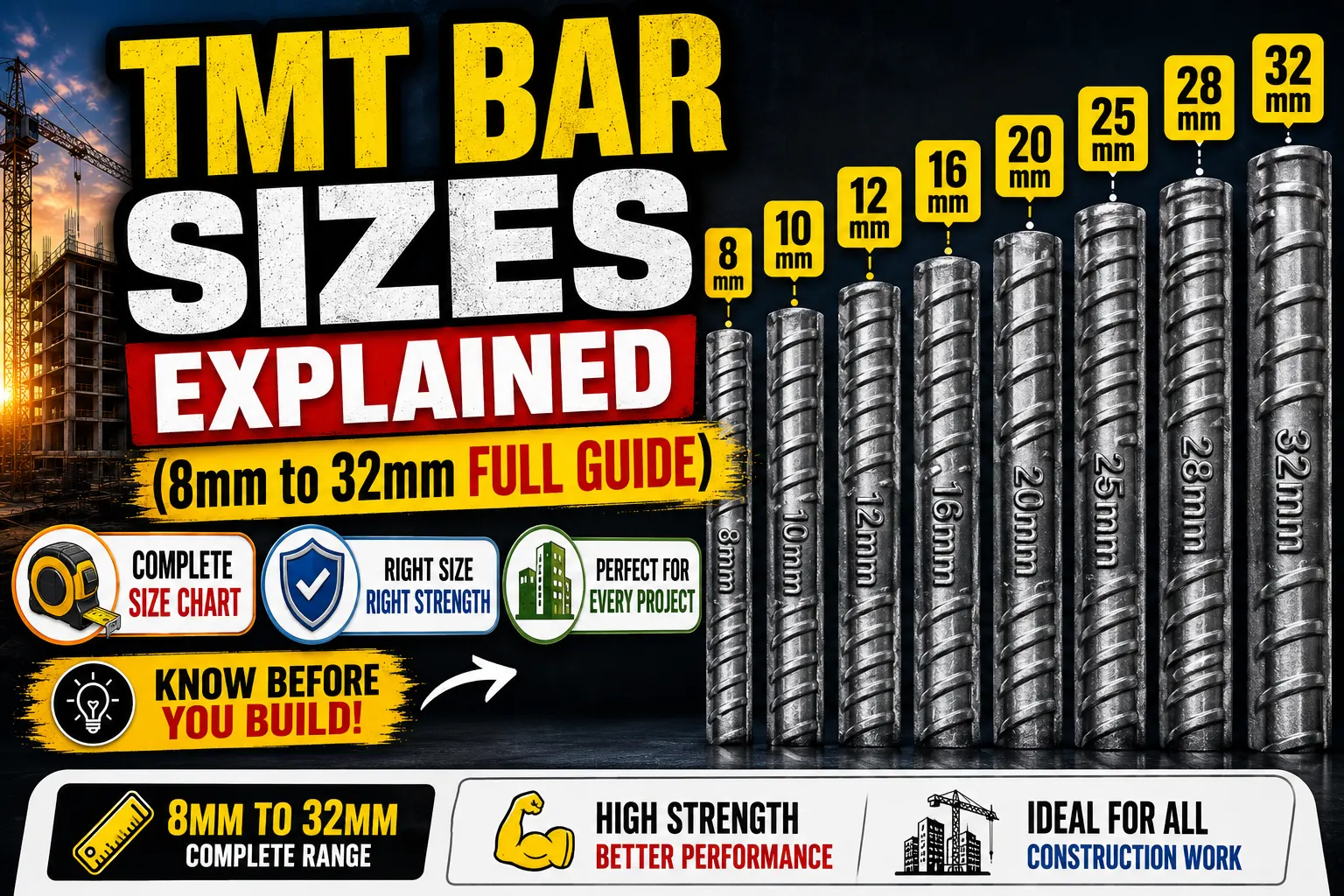
Contractors working on large projects should also review TMT Bar Sizes Explained (8mm to 32mm Full Guide) for better size planning.
Beam Reinforcement Guide
Beams transfer slab loads to columns and foundations.
Weak beam reinforcement can lead to:
- Structural sagging
- Crack formation
- Deflection issues
- Reduced building life
Recommended Grades for Beams
Fe 500D
Ideal for residential projects.
Fe 550D
Suitable for commercial and heavy-load structures.
Fe 600
Used in special infrastructure projects.
Beam Reinforcement Best Practices
- Maintain proper lap length
- Use correct stirrup spacing
- Avoid reinforcement congestion
- Ensure proper concrete compaction
- Use corrosion-resistant bars
High-Rise Safety Factors in TMT Selection
Safety is the most critical aspect of high-rise construction.
Modern structural consultants evaluate multiple factors before finalizing reinforcement grades.
1. Seismic Resistance
India has multiple earthquake-prone zones.
High-rise structures in these zones require:
- High ductility
- Better elongation
- Strong bonding properties
Ductile grades like Fe 500D and Fe 550D perform significantly better during seismic activity.
2. Fire Resistance
High-quality TMT bars maintain better strength retention under elevated temperatures.
This improves:
- Structural safety
- Evacuation time
- Building integrity during fire exposure
3. Corrosion Resistance
Corrosion weakens reinforcement and reduces building lifespan.
Premium TMT bars provide:
- Better corrosion resistance
- Lower maintenance
- Improved structural durability
4. Fatigue Resistance
High-rise buildings experience repeated load cycles from:
- Wind movement
- Occupancy variation
- Temperature expansion
Good fatigue resistance increases structural longevity.
Importance of TMT Quality in High-Rise Projects
Using low-quality reinforcement in tall structures can create major risks.
Common Risks of Poor TMT Quality
- Structural cracks
- Reduced load capacity
- Corrosion failure
- Weak RCC bonding
- Lower seismic resistance
This is why reputed builders only source TMT from trusted suppliers with:
- Proper GST billing
- Mill test certificates
- Standard weight compliance
- Reliable dispatch support
For procurement quality checks, read How to Check TMT Bar Quality Before Buying.
Bulk Procurement Tips for High-Rise Projects
Large projects require systematic procurement planning.
Improper procurement can cause:
- Project delays
- Material shortages
- Price fluctuations
- Inventory losses
1. Choose the Right Grade Early
Structural consultants should finalize grades before procurement starts.
2. Verify Weight Standards
Always verify:
- Weight per meter
- Bundle weight
- IS standard compliance
Useful estimation formula:
Weight per meter=D2162\text{Weight per meter} = \frac{D^2}{162}Weight per meter=162D2
3. Plan Dispatch Schedule
High-rise projects consume reinforcement continuously.
Staggered dispatch planning improves:
- Site management
- Cash flow
- Inventory handling
4. Source from Reliable Suppliers
Bulk buyers prefer suppliers that provide:
- Ready stock
- Transparent pricing
- Fast dispatch
- Technical support
- Documentation support
This is one reason many contractors and infrastructure buyers work with Pipe & Sections Pvt Ltd. for bulk TMT supply requirements.
Why Builders Prefer Pipe & Sections Pvt Ltd.
High-rise construction projects require dependable reinforcement supply partners.
Pipe & Sections Pvt Ltd. supplies TMT bars across India for:
- Residential towers
- Commercial buildings
- Infrastructure projects
- Industrial construction
Key Advantages
- Fe 500, Fe 550, Fe 550D & Fe 600 availability
- Bulk order support
- Transparent pricing
- GST billing
- Ready stock
- Fast dispatch
- Standard weight compliance
- Professional B2B supply handling
The company supports contractors, developers, fabricators, EPC companies, and project procurement teams with reliable supply chain coordination.
Future Trends in High-Rise Reinforcement
The Indian construction industry is rapidly shifting toward:
- Higher-strength TMT grades
- Smarter RCC design
- Optimized steel consumption
- Earthquake-resistant structures
- Sustainable construction practices
As urban infrastructure grows, demand for premium TMT bars in high-rise projects is expected to increase significantly over the coming years.
Conclusion
High-rise buildings demand high-performance reinforcement capable of handling heavy structural loads, dynamic movement, and long-term durability requirements. Choosing the right TMT grade, proper reinforcement sizes, and reliable supply partner directly impacts project safety and structural lifespan. Modern builders increasingly prefer Fe 500D, Fe 550D, and Fe 600 TMT bars for high-rise projects because of their superior strength, ductility, fatigue resistance, and RCC bonding performance. For contractors, developers, and infrastructure companies looking for reliable bulk supply, Pipe & Sections Pvt Ltd. provides quality TMT bars with transparent pricing, ready stock availability, GST billing, and dispatch support across India.
If you are planning a high-rise construction project, choosing technically suitable reinforcement today can significantly improve the safety, durability, and efficiency of your structure in the long run.
Frequently Asked Questions (FAQs)
Which TMT grade is best for high-rise buildings?
Fe 500D and Fe 550D are commonly preferred for high-rise construction due to their strength and ductility balance.
Is Fe 600 suitable for residential buildings?
Fe 600 is generally used in heavy infrastructure and specialized high-load structures rather than standard residential projects.
Why is ductility important in high-rise buildings?
Ductility helps reinforcement absorb seismic energy and structural movement without sudden failure.
Which TMT size is commonly used in high-rise columns?
16mm to 25mm bars are commonly used depending on structural load calculations.
Are TMT bars necessary for earthquake resistance?
Yes, ductile TMT bars significantly improve seismic resistance and structural flexibility.
Strength, reliability, and excellence in every steel pipe and section we supply for your growth.
- +91 9310020802
- [email protected]
- 22 & 23, Apollo Market, Prakash Industrial Estate, Sahibabad - 201005, Ghaziabad (U.P.) INDIA.
Work Hours
- Mon-Sat 10:00AM -6:00PM
Explore the premium range of TMT bars from Pipe & Sections, engineered with advanced technology to deliver superior strength, exceptional durability.
© 2026 All Rights Reserved. Designed and Managed by SBS DIGITAL INFOTECH.