
Company Overview
At Pipe and Sections Pvt Ltd, we help contractors, builders, dealers, and project buyers get the latest tmt saria rate, transparent quotations, and fast delivery across India.
Most Recent Posts
- All Posts
- TMT Bars
Tags

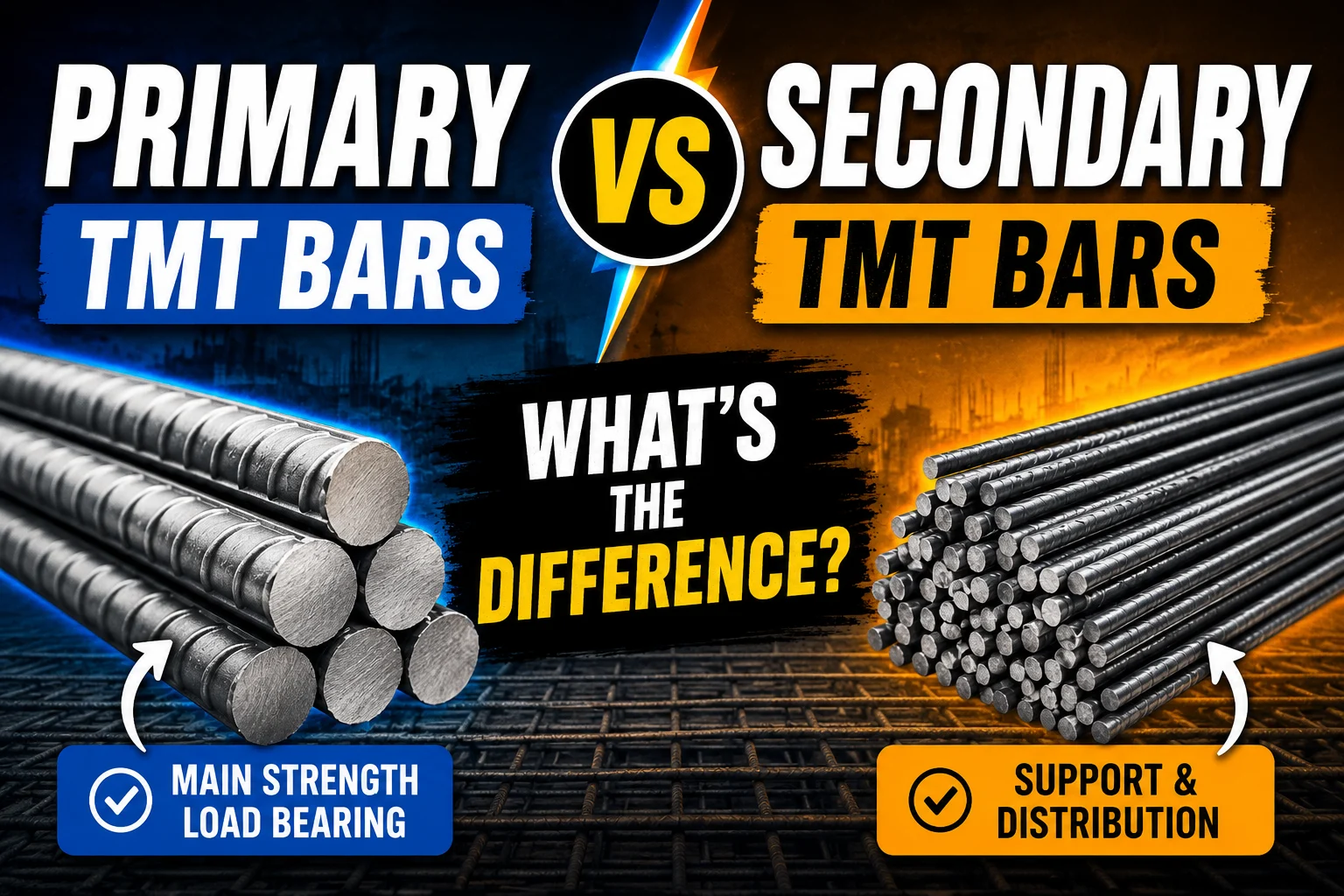
Primary vs Secondary TMT Bars: What’s the Difference?
Choosing between primary and secondary TMT bars is critical for construction quality, structural safety, and long-term durability. Primary TMT bars are manufactured by integrated steel plants using controlled raw materials and advanced processes, while secondary TMT bars are generally produced from recycled steel in smaller rolling mills. Primary TMT bars usually offer better consistency, strength, ductility, and reliability for residential, commercial, and infrastructure projects. TMT prices are influenced by multiple market factors including raw material costs, steel demand, transportation expenses, and production trends. Read our detailed guide on why TMT prices change daily in India to better understand current steel market movements.
Introduction
TMT bars are one of the most important materials used in modern construction. Whether it is a residential house, commercial building, warehouse, bridge, or industrial project, the quality of reinforcement steel directly impacts structural strength and safety.
One of the most common questions buyers ask before purchasing reinforcement steel is:
“What is the difference between primary and secondary TMT bars?”
This comparison is extremely important because many contractors, builders, and individual homeowners often choose TMT bars based only on price without understanding the actual difference in quality, manufacturing process, durability, and performance.
In today’s construction market, both primary and secondary TMT bars are widely available. However, selecting the right type depends on project requirements, load-bearing needs, budget, and long-term structural expectations.
At Pipe & Sections Pvt Ltd, contractors, builders, and infrastructure buyers frequently seek guidance on selecting the right TMT category for residential, commercial, and industrial construction projects. Understanding the real difference between primary and secondary TMT bars helps buyers avoid low-quality material risks and make informed purchasing decisions.
What is Primary TMT?
Primary TMT bars are manufactured by large integrated steel manufacturers using high-quality raw materials and controlled production systems.
These TMT bars are generally produced from:
- Iron ore
- Sponge iron
- Billets produced internally
- Controlled metallurgy processes
Primary steel manufacturers follow strict quality standards and advanced production technologies to maintain consistent chemical composition, strength, ductility, and durability.
Primary TMT bars are usually manufactured in:
- Large integrated steel plants
- Automated rolling mills
- Thermo-mechanical treatment facilities
These manufacturers maintain proper testing procedures and quality certifications during production.
If you are planning construction in an earthquake-prone area, this comprehensive article on “Best TMT Bars for Earthquake Resistant Construction (2026 Guide)” helps you understand the importance of Fe 500D and Fe 550D TMT bars for better seismic resistance and structural stability.
Key Characteristics of Primary TMT Bars
1. Consistent Quality
Primary TMT bars maintain uniform mechanical and chemical properties throughout production batches.
2. Better Strength
They generally provide superior yield strength and tensile strength.
3. Higher Ductility
Primary TMT bars perform better during earthquakes and heavy-load applications.
4. Better Corrosion Resistance
Controlled chemical composition improves long-term durability.
5. Reliable Testing Standards
Most primary manufacturers provide:
- Mill Test Certificates
- ISI certifications
- Standardized quality reports
What is Secondary TMT?
Secondary TMT bars are generally produced by smaller rolling mills using recycled steel scrap, purchased billets, or induction furnace material.
These manufacturers may not always have fully integrated steelmaking facilities.
Secondary steel production commonly involves:
- Scrap melting
- Purchased billets
- Re-rolling processes
- Smaller-scale production systems
Secondary TMT bars are widely used because they are comparatively cheaper than primary TMT bars. However, quality consistency can vary significantly depending on the manufacturer and production standards.
Key Characteristics of Secondary TMT Bars
1. Lower Cost
Secondary TMT bars are usually more affordable.
2. Variable Quality
Strength and chemical consistency may differ between batches.
3. Mixed Raw Materials
Production often depends on recycled steel and external billet sourcing.
4. Limited Quality Control
Smaller mills may have less advanced testing systems.
5. Budget-Friendly Option
Often preferred for:
- Small projects
- Temporary structures
- Low-budget construction
Manufacturing Difference Between Primary and Secondary TMT Bars
The manufacturing process is one of the biggest differences between primary and secondary TMT bars.
Primary TMT Manufacturing Process
Primary manufacturers usually follow:
- Iron ore processing
- Sponge iron production
- Steelmaking in blast furnaces or electric arc furnaces
- Billet casting
- Controlled rolling
- Thermo-mechanical treatment
- Automated cooling systems
- Quality testing
This integrated process ensures:
- Better metallurgy
- Consistent chemistry
- Uniform strength
- Improved ductility
Secondary TMT Manufacturing Process
Secondary manufacturers commonly use:
- Scrap collection
- Scrap melting
- Billet purchasing
- Re-rolling
- Basic heat treatment
- Limited testing
Since raw material quality may vary, final product consistency can also fluctuate.
Strength Comparison: Primary vs Secondary TMT
Strength is one of the most important factors in reinforcement steel selection.
Primary TMT Bars
Primary TMT bars generally provide:
- Better yield strength
- Better tensile strength
- More consistent performance
- Better elongation properties
They are ideal for:
- RCC structures
- Multi-storey buildings
- Commercial projects
- Industrial foundations
- Infrastructure projects
Secondary TMT Bars
Secondary TMT bars may:
- Show inconsistent strength
- Have variable elongation
- Offer lower structural reliability in some cases
However, high-quality secondary manufacturers can still produce acceptable-grade TMT bars for smaller construction applications.
Quality Comparison
Surface Finish
Primary TMT bars usually have:
- Cleaner finish
- Better rib patterns
- Consistent dimensions
Secondary TMT bars may sometimes show:
- Uneven surface texture
- Variation in rib design
- Inconsistent rolling finish
Chemical Composition
Primary manufacturers maintain controlled:
- Carbon content
- Sulphur levels
- Phosphorus limits
This improves:
- Weldability
- Corrosion resistance
- Structural performance
Secondary TMT bars may have greater composition variations depending on scrap quality.
Quality Testing
Primary manufacturers conduct:
- Tensile testing
- Bend testing
- Re-bend testing
- Ultrasonic inspections
- Chemical analysis
Smaller secondary mills may have more limited testing infrastructure.
Price Comparison: Primary vs Secondary TMT
Price is one of the biggest reasons buyers compare these two categories.
Why Secondary TMT is Cheaper
Secondary TMT bars generally cost less because:
- Recycled materials are used
- Production costs are lower
- Smaller operational setups reduce overheads
Why Primary TMT Costs More
Primary TMT bars are priced higher due to:
- Better raw materials
- Advanced production technology
- Higher quality standards
- Stronger testing systems
- Better long-term reliability
Is Higher Price Worth It?
For critical structures, the additional cost of primary TMT is often justified because structural safety and durability are more important than short-term savings. At Pipe & Sections Pvt Ltd, many builders and contractors prefer primary-grade TMT bars for projects requiring long-term structural reliability and consistent reinforcement performance.
Which One Should You Choose?
The right choice depends on:
- Project type
- Budget
- Structural load
- Safety requirements
- Long-term durability expectations
Choosing the right type of TMT bar is only one part of successful procurement. Explore our complete TMT Buying Guide for Contractors for expert tips on bulk purchasing, quality verification, pricing strategy, and supplier selection.
Choose Primary TMT If:
You are constructing:
- Residential buildings
- Commercial projects
- Multi-storey structures
- Infrastructure projects
- Industrial facilities
- Earthquake-resistant structures
Primary TMT is ideal when:
- Safety is critical
- Structural lifespan matters
- High load-bearing capacity is required
- Consistency is important
Choose Secondary TMT If:
You are working on:
- Temporary structures
- Small low-budget projects
- Minor non-critical applications
However, buyers should still verify:
- ISI certification
- Weight accuracy
- Test certificates
- Manufacturer reputation
Risk Factors Explained
Using low-quality TMT bars can create major long-term structural risks.
1. Reduced Structural Strength
Poor-quality reinforcement may fail under heavy loads.
2. Corrosion Problems
Inferior chemical composition increases rusting risks.
3. Cracking Issues
Low ductility may result in structural cracks over time.
4. Earthquake Vulnerability
Poor elongation properties reduce seismic resistance.
5. Weight Manipulation
Some low-grade products may have underweight bars, leading to material shortages and reduced strength.
How to Identify Good Quality TMT Bars
Before purchasing TMT bars, buyers should check:
- ISI mark
- Proper rib pattern
- Standard weight
- Manufacturer branding
- Mill Test Certificate
- Surface finish
- Bend performance
Reliable suppliers also provide:
- GST billing
- Proper dispatch records
- Technical assistance
- Standardized quality documentation
Pipe & Sections Pvt Ltd supplies TMT bars in multiple grades and sizes with transparent pricing, standard weight support, GST billing, and bulk dispatch assistance for contractors, builders, and infrastructure projects across India.
Primary vs Secondary TMT: Quick Comparison Table
| Feature | Primary TMT | Secondary TMT |
|---|---|---|
| Raw Material | Iron ore / integrated steel | Scrap / purchased billets |
| Quality Consistency | High | Variable |
| Strength | Better | Moderate |
| Ductility | Better | Depends on manufacturer |
| Corrosion Resistance | Higher | Variable |
| Manufacturing Control | Advanced | Limited |
| Testing Standards | Strong | Varies |
| Price | Higher | Lower |
| Best For | Critical structures | Budget projects |
Why Builders Prefer Primary TMT for Major Projects
Large-scale builders and infrastructure contractors usually prefer primary TMT because:
- Structural reliability is critical
- Project lifespan is longer
- Compliance requirements are stricter
- Better load-bearing performance is needed
- Safety standards are higher
The cost difference between primary and secondary TMT is relatively small compared to the long-term structural impact.
Final Conclusions :
Understanding the difference between primary and secondary TMT bars is essential for making the right construction decision.
Primary TMT bars generally offer:
- Better strength
- Better ductility
- Better corrosion resistance
- Better consistency
- Higher long-term reliability
Secondary TMT bars may offer lower pricing, but quality can vary depending on the manufacturer and production standards. For residential, commercial, industrial, and infrastructure construction, choosing high-quality reinforcement steel is critical for structural safety and long-term performance. Pipe & Sections Pvt Ltd supplies TMT bars in multiple grades and sizes with transparent pricing, bulk dispatch support, GST billing, and reliable supply assistance for contractors, dealers, builders, and infrastructure buyers across India.
FAQs
What is the main difference between primary and secondary TMT bars?
Primary TMT bars are manufactured using controlled raw materials and integrated steelmaking processes, while secondary TMT bars are usually produced from recycled steel or purchased billets in smaller mills.
Which is better: primary or secondary TMT?
Primary TMT bars are generally considered better for structural reliability, consistency, strength, and long-term durability.
Are secondary TMT bars safe?
Good-quality secondary TMT bars can be used for smaller or budget projects, but buyers should verify certifications and quality standards carefully.
Why are primary TMT bars more expensive?
Primary TMT bars cost more because they use better raw materials, advanced production technology, and stricter quality control systems.
Can secondary TMT bars be used for house construction?
Some secondary TMT bars may be used for small residential projects if they meet quality standards, but primary TMT is usually preferred for long-term structural safety.
How can I identify original TMT bars?
Check:
- ISI mark
- Weight accuracy
- Manufacturer branding
- Test certificates
- Surface quality
Strength, reliability, and excellence in every steel pipe and section we supply for your growth.
- +91 9310020802
- [email protected]
- 22 & 23, Apollo Market, Prakash Industrial Estate, Sahibabad - 201005, Ghaziabad (U.P.) INDIA.
Work Hours
- Mon-Sat 10:00AM -6:00PM
Explore the premium range of TMT bars from Pipe & Sections, engineered with advanced technology to deliver superior strength, exceptional durability.
© 2026 All Rights Reserved. Designed and Managed by SBS DIGITAL INFOTECH.