
Company Overview
At Pipe and Sections Pvt Ltd, we help contractors, builders, dealers, and project buyers get the latest tmt saria rate, transparent quotations, and fast delivery across India.
Most Recent Posts
- All Posts
- TMT Bars

Tags

TMT Buying Guide for Contractors (2026)
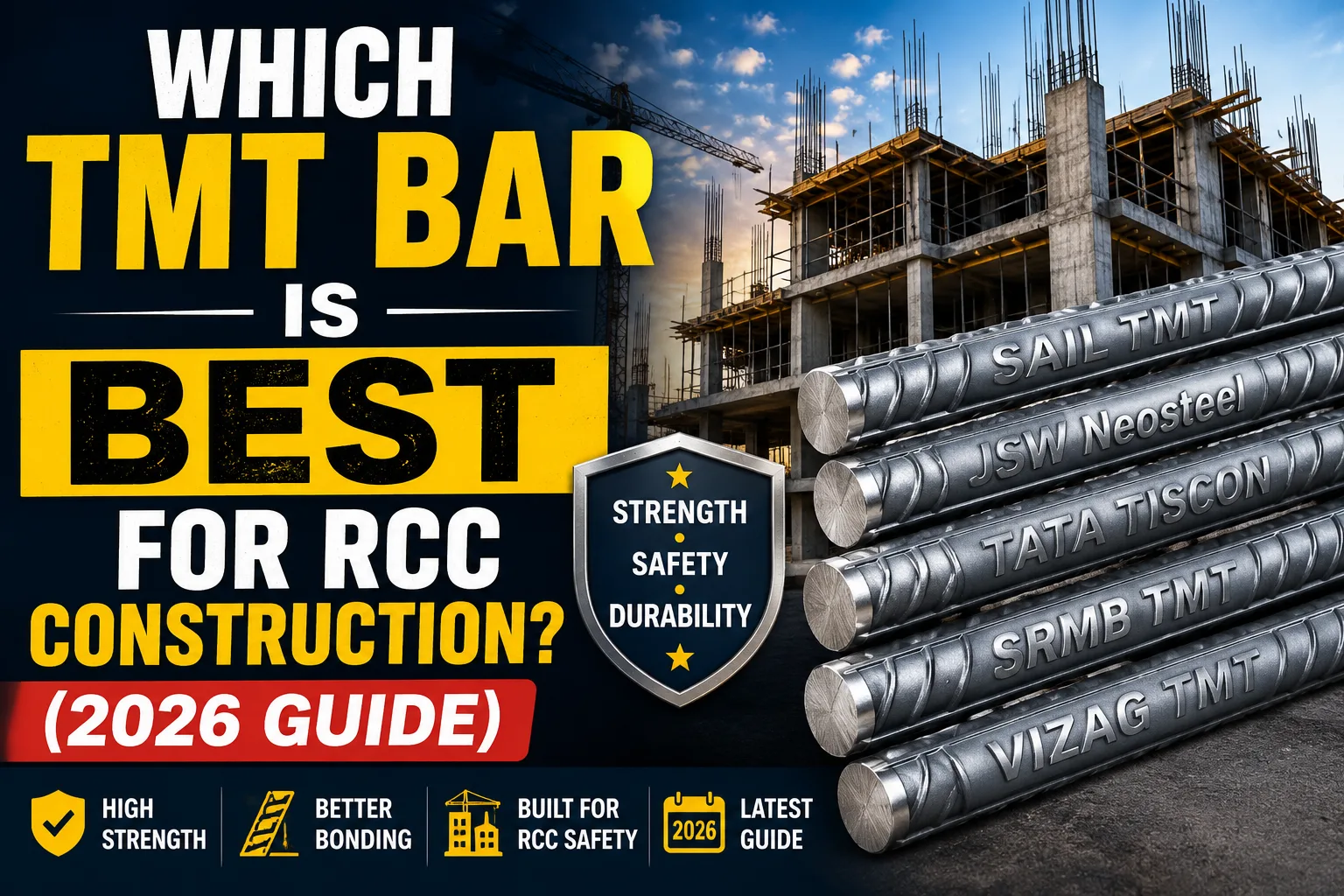
Contractors buying TMT bars in 2026 need to focus on more than just price. The right TMT grade, accurate weight, original material quality, proper logistics, and reliable supplier support directly affect project safety, construction cost, and long-term durability. Choosing a trusted supplier like Pipe & Sections Pvt Ltd. helps contractors secure quality TMT bars with transparent pricing, GST billing, ready stock, and bulk dispatch support across India. Before purchasing reinforcement steel for residential or commercial construction, it is important to understand which TMT grades work best for RCC structures. Our Which TMT Bar is Best for RCC Construction? guide explains everything in detail.
Introduction
TMT bars are one of the most important materials used in construction projects. Whether it is residential construction, commercial buildings, industrial structures, bridges, warehouses, or infrastructure projects, the strength of the structure depends heavily on the quality of TMT bars used.
In 2026, contractors are facing rising steel prices, fluctuating market conditions, fake material risks, and project deadline pressure. Because of this, buying TMT bars is no longer just about getting the lowest rate. Contractors now need a proper TMT buying strategy that balances quality, pricing, logistics, durability, and supplier reliability. This complete TMT buying guide explains how contractors can choose the right TMT bars, avoid low-quality material, verify weight accuracy, negotiate better prices, and plan bulk procurement effectively.
Contractors who understand steel market trends can often optimize procurement costs more effectively. Learn why TMT prices change daily in India and how market conditions affect bulk steel purchasing decisions.
Choosing the Right TMT Grade
One of the biggest mistakes contractors make is selecting the wrong TMT grade for the project. Every grade has different strength and application suitability.
Before selecting steel for tall structures, it is important to understand the right grade, load-bearing capacity, and earthquake resistance. This detailed guide on TMT Bars for High-Rise Buildings also explains how to choose the right best TMT bars for construction for long-term structural safety.
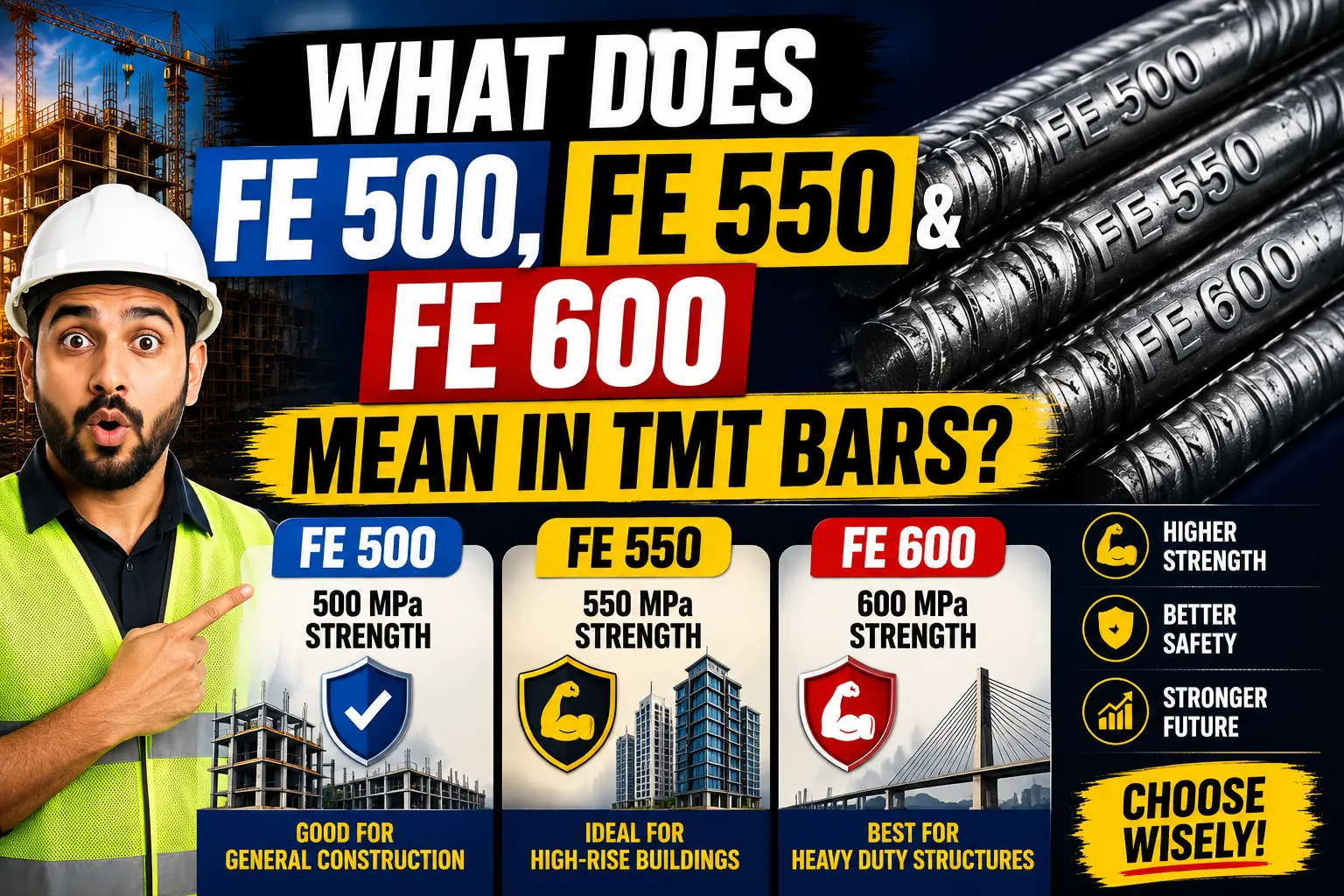
What Does TMT Grade Mean?
The “Fe” value in TMT bars represents the minimum yield strength of the steel.
For example:
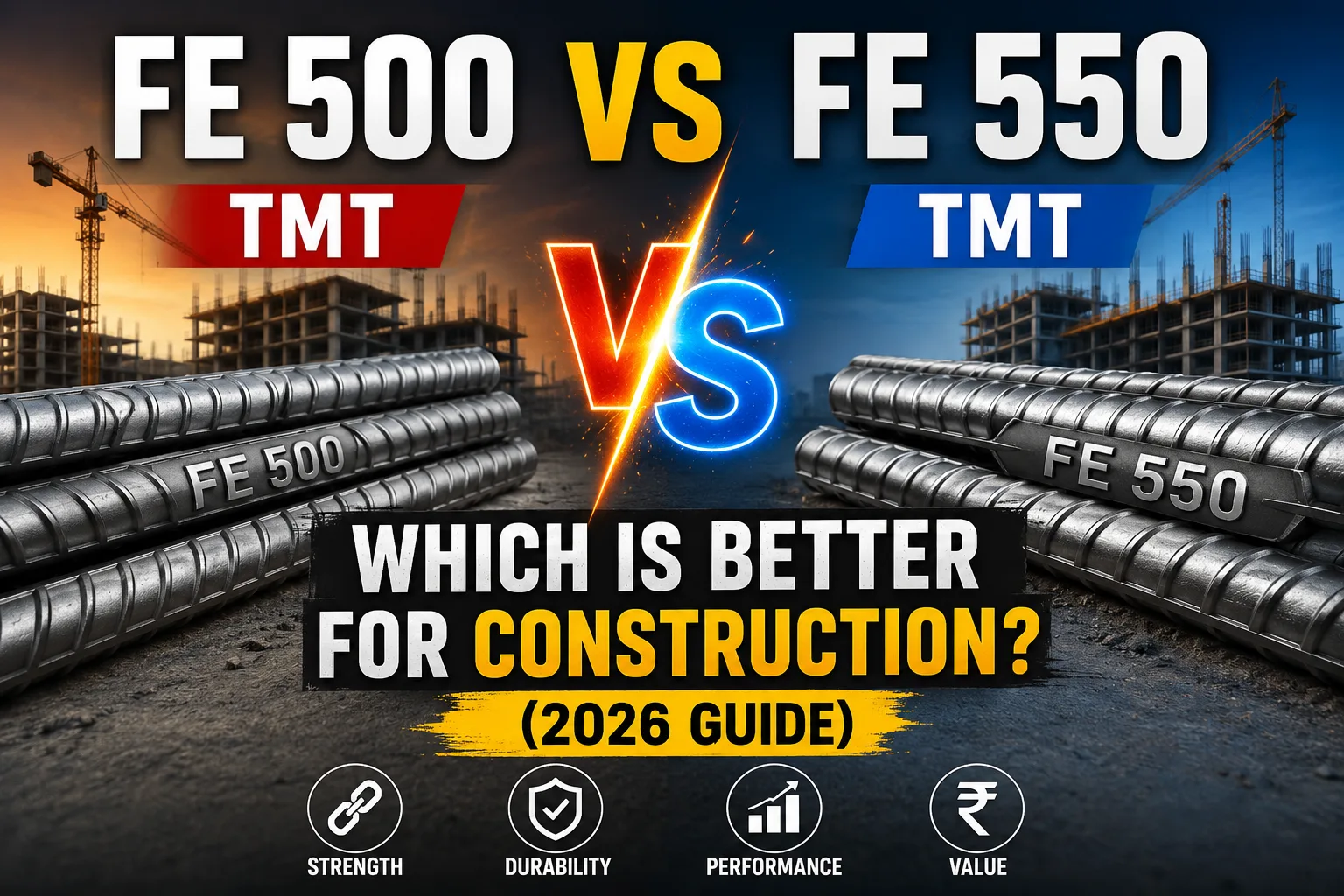
- Fe 500 = 500 N/mm² yield strength
- Fe 550 = 550 N/mm² yield strength
- Fe 550D = 550 N/mm² with higher ductility
- Fe 600 = 600 N/mm² yield strength
Higher grades offer better load-bearing capacity but may not be necessary for every project.
Fe 500 TMT Bars
Fe 500 is one of the most commonly used grades in India.
Best For:
- Residential construction
- Individual houses
- Small commercial projects
- Slabs and beams
Advantages:
- Affordable pricing
- Good strength balance
- Easy availability
- Suitable for general RCC work
Most contractors prefer Fe 500 for standard residential construction because it offers good structural strength at a practical cost.
Fe 550 TMT Bars
Fe 550 bars are stronger than Fe 500 and are suitable for heavy-load applications.
Best For:
- Commercial buildings
- High-rise structures
- Industrial projects
- Heavy RCC structures
Advantages:
- Higher tensile strength
- Better load handling
- Reduced steel consumption in some cases
Fe 550D TMT Bars
The “D” stands for ductility.
Fe 550D bars provide both high strength and flexibility, making them suitable for structures requiring earthquake resistance and stress absorption.
Best For:
- Seismic zones
- Bridges
- Columns
- Infrastructure projects
- Heavy structural work
Why Contractors Prefer Fe 550D:
- Better elongation
- Improved flexibility
- Reduced cracking risk
- Better long-term structural performance
Fe 600 TMT Bars
Fe 600 bars are high-strength reinforcement bars mainly used in infrastructure and industrial projects.
Best For:
- Flyovers
- Industrial foundations
- Mega infrastructure projects
- Heavy engineering structures
Fe 600 is generally not required for standard residential work because it increases project cost.
Choosing the Right TMT Size
Selecting the correct TMT bar size is equally important.
Wrong size selection can increase construction cost or weaken the structure.
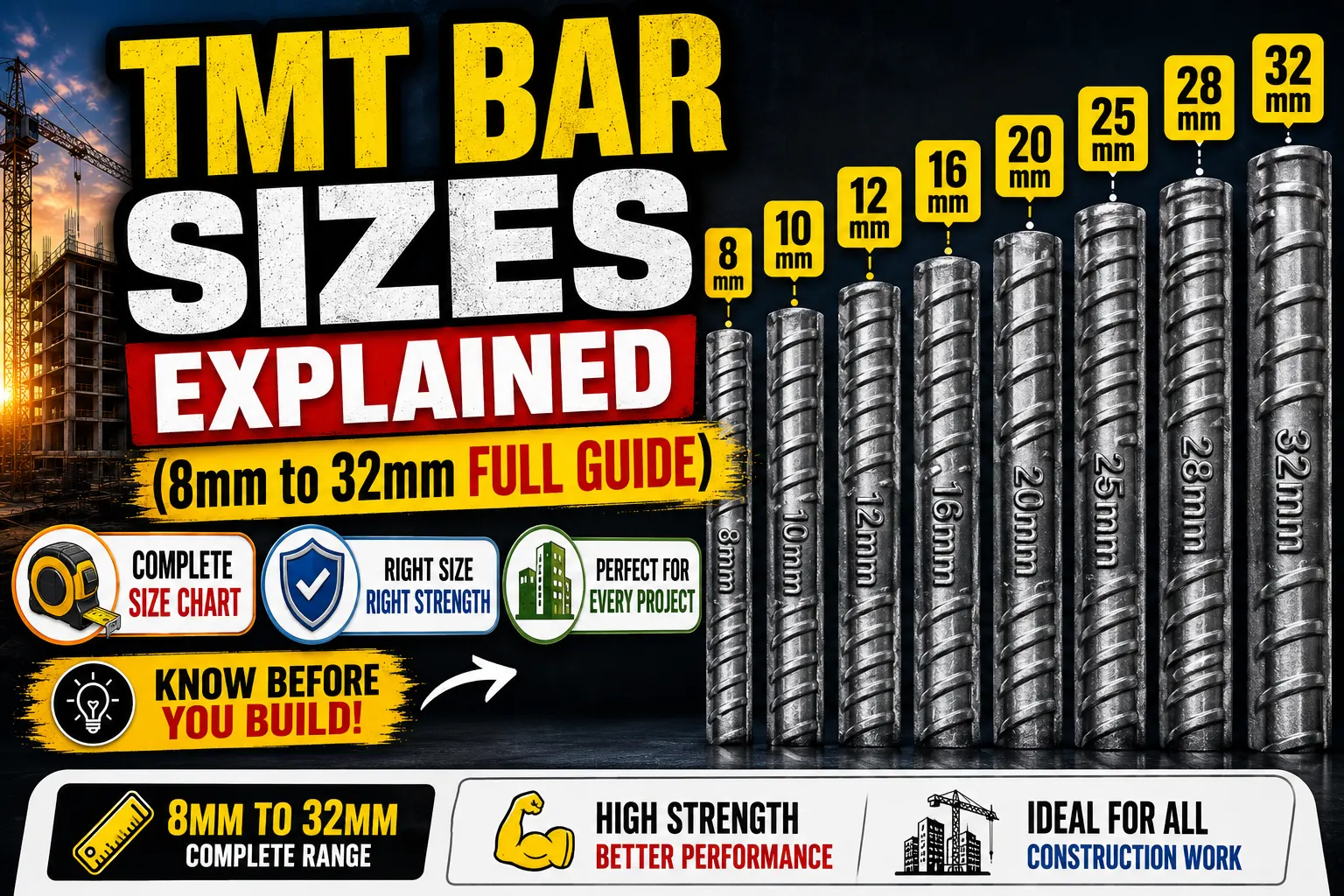
Standard TMT Sizes in India
| TMT Size | Common Use |
|---|---|
| 8mm | Stirrups and rings |
| 10mm | Slabs and light RCC work |
| 12mm | Residential slabs and beams |
| 16mm | Columns and beams |
| 20mm | Heavy columns and foundations |
| 25mm | Industrial structures |
| 32mm | Infrastructure and large RCC work |
Which TMT Size is Best for House Construction?
For most residential projects:
- 10mm and 12mm → slabs
- 16mm → columns and beams
- 20mm → foundations
Contractors should always follow structural engineer recommendations before finalizing sizes.
Common Size Selection Mistakes
1. Using Larger Sizes Unnecessarily
This increases project cost without improving performance significantly.
2. Ignoring Structural Drawings
Improper size selection can affect load distribution.
3. Buying Mixed Sizes Without Planning
Poor inventory planning leads to wastage and site confusion.
Weight Verification of TMT Bars
Weight verification is one of the most important checks during TMT procurement.
Many contractors lose money because of underweight material.
Why Weight Verification Matters
Even small weight differences can cause major financial losses in bulk purchases.
For example:
If a supplier provides underweight bars in a 50-ton order, the contractor may lose thousands of rupees without realizing it.
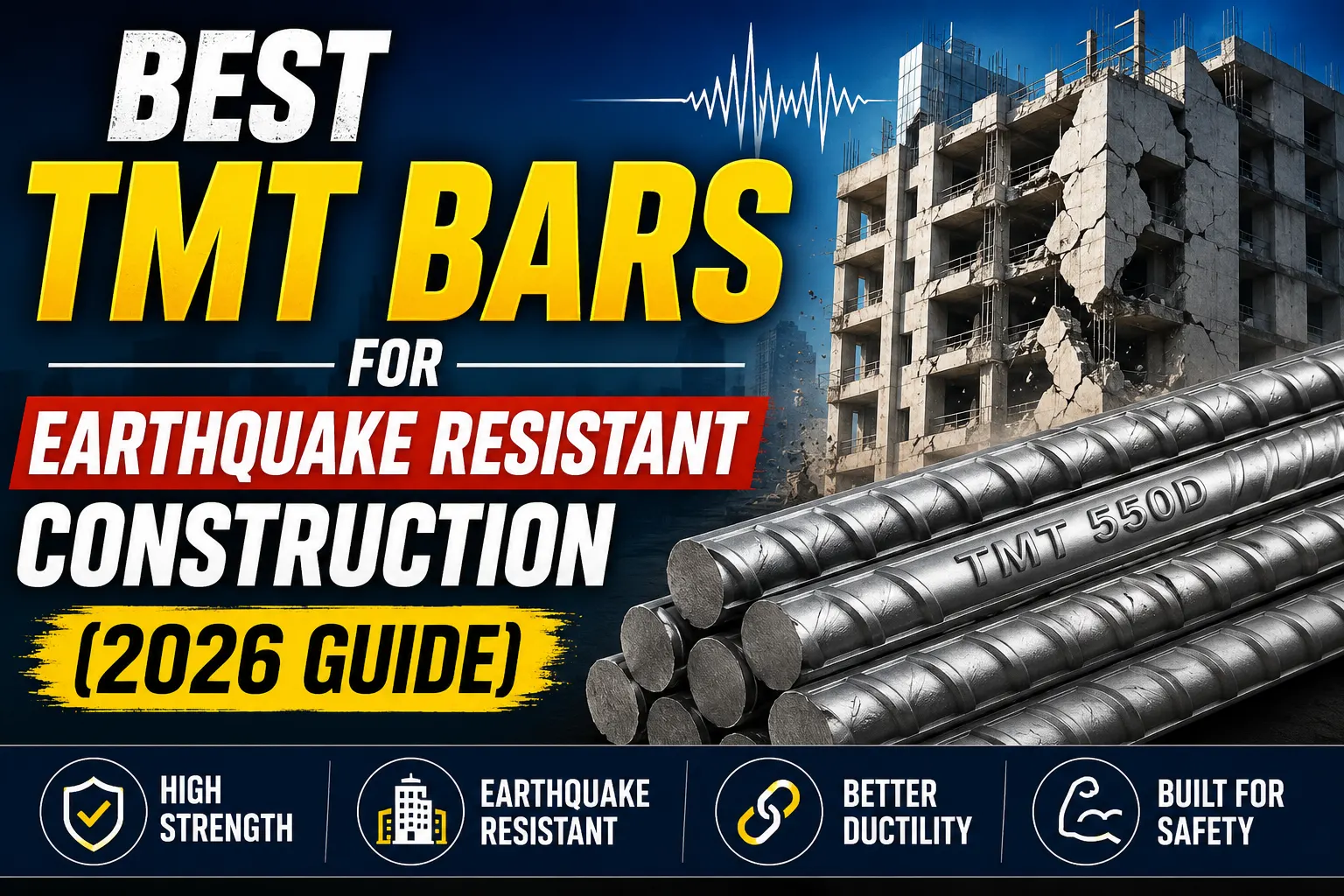
If you are planning construction in an earthquake-prone area, this comprehensive article on “Best TMT Bars for Earthquake Resistant Construction (2026 Guide)” helps you understand the importance of Fe 500D and Fe 550D TMT bars for better seismic resistance and structural stability.
Standard TMT Weight Formula
Useful contractor formula:
Weight per meter=D2162\text{Weight per meter} = \frac{D^2}{162}Weight per meter=162D2
Where:
- D = Diameter in millimeters
Approximate Standard Weight Chart
| Size | Weight Per Meter |
|---|---|
| 8mm | 0.395 kg |
| 10mm | 0.617 kg |
| 12mm | 0.888 kg |
| 16mm | 1.58 kg |
| 20mm | 2.47 kg |
| 25mm | 3.85 kg |
| 32mm | 6.31 kg |
How Contractors Can Verify Weight
1. Check Bundle Weight
Always compare actual bundle weight with standard charts.
2. Random Piece Testing
Select random bars and weigh them.
3. Verify Length
Standard TMT bars are generally supplied in 12-meter lengths.
4. Ask for Mill Test Certificate
Original suppliers provide proper documentation.
How to Avoid Fake TMT Bars
Fake and secondary TMT bars are a serious issue in the Indian steel market.
Using low-quality bars can compromise structural safety.
Signs of Fake TMT Bars
1. Missing ISI Mark
Original TMT bars generally carry proper branding and markings.
2. Inconsistent Rib Pattern
Poor rolling quality is a major red flag.
3. Unusually Low Pricing
If pricing is significantly below market rates, quality may be compromised.
4. Rusted or Damaged Material
Excessive rust indicates poor storage or inferior manufacturing.
Difference Between Primary and Secondary TMT
Primary TMT:
- Manufactured by integrated steel plants
- Better quality consistency
- Higher reliability
- Suitable for major projects
Secondary TMT:
- Manufactured using rerolling processes
- Lower cost
- Quality varies significantly
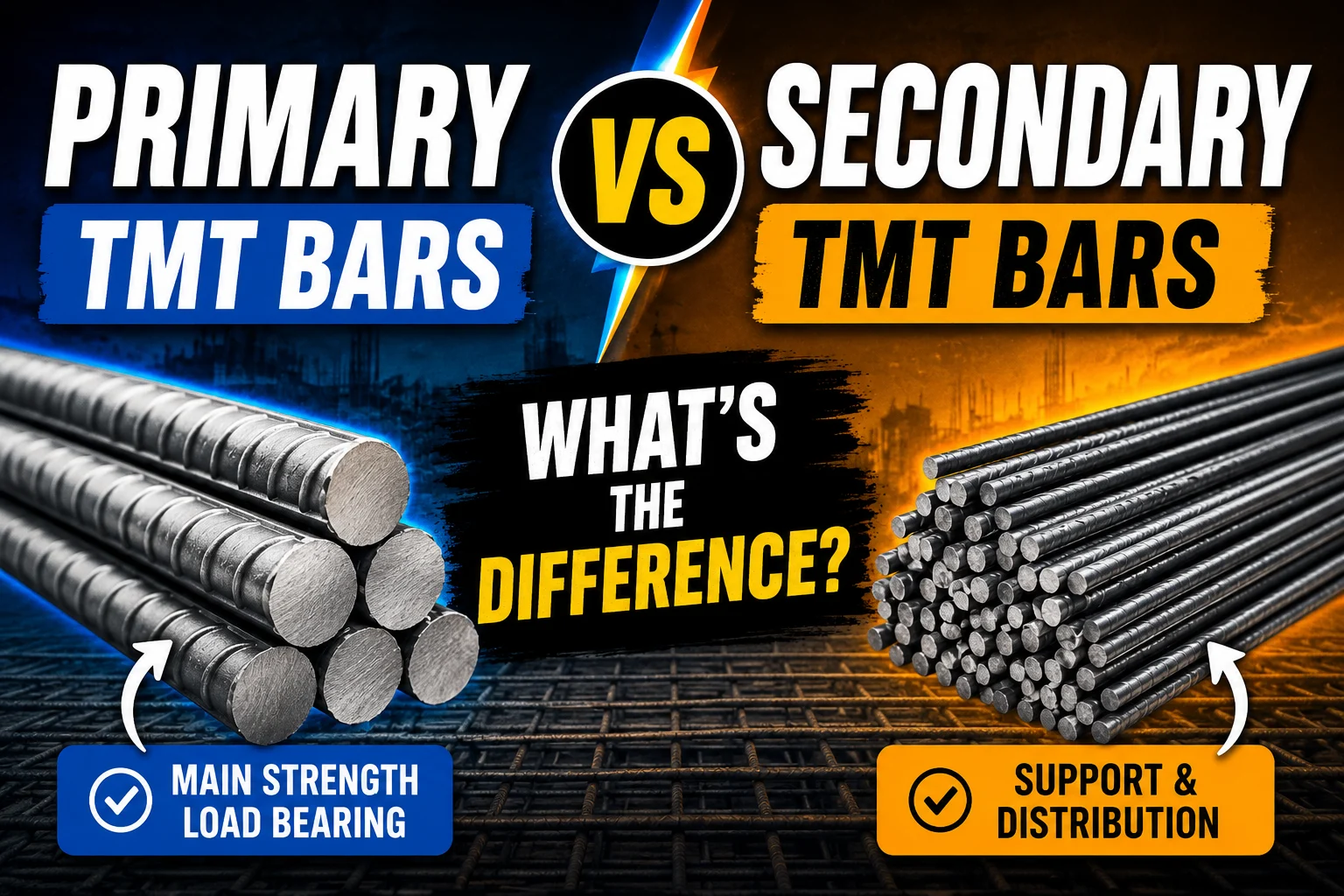
For critical RCC structures, contractors should always prioritize primary-grade material. Before finalizing any bulk order, contractors should also understand the difference between primary and secondary TMT bars to ensure the right balance of structural reliability, quality, and project cost.
Bulk Buying Tips for Contractors
Proper bulk procurement strategy can significantly reduce project costs.
1. Plan Material in Advance
Last-minute buying usually results in:
- Higher pricing
- Delivery delays
- Limited stock availability
Advance planning helps secure better rates.
2. Lock Rates During Stable Market Periods
Steel prices fluctuate regularly because of:
- Raw material cost
- Demand changes
- Fuel prices
- Global market movement
Contractors should monitor market trends before placing large orders.
3. Consolidate Orders
Instead of multiple small orders:
- Combine requirements
- Purchase in bulk
- Reduce freight cost
Bulk orders often receive better pricing support.
4. Work with Reliable Suppliers
Reliable suppliers help contractors with:
- Consistent stock
- Fast dispatch
- Proper invoicing
- Technical support
- Weight transparency
This is why many contractors prefer working with Pipe & Sections Pvt Ltd. for bulk TMT supply requirements.
Price Negotiation Tips for Contractors
Smart negotiation can improve project profitability significantly.
1. Compare Market Rates
Always compare:
- Per ton rates
- Freight charges
- GST structure
- Loading/unloading costs
Sometimes lower base pricing may include hidden costs.
2. Negotiate Freight Separately
Freight costs can heavily impact final landed cost.
For large orders:
- Ask for separate freight breakdown
- Compare transport options
- Optimize delivery schedules
3. Use Long-Term Supplier Relationships
Contractors with regular buying history often receive:
- Better pricing
- Priority dispatch
- Flexible payment terms
4. Avoid Lowest Price Trap
Extremely low prices may indicate:
- Underweight bars
- Secondary material
- Poor-quality steel
Always balance quality with pricing.
Logistics & Delivery Planning
Logistics planning is one of the most ignored parts of steel procurement.
Poor delivery coordination can delay the entire project.
Key Logistics Factors Contractors Should Check
1. Delivery Timeline
Confirm:
- Dispatch schedule
- Transit time
- Vehicle availability
2. Site Accessibility
Large trucks may face access issues in urban areas.
Always discuss:
- Road access
- Unloading space
- Crane or labor arrangements
3. Stock Availability
Ready stock suppliers reduce waiting time significantly.
4. Material Safety During Transport
Proper loading and transport handling reduce damage risk.
Why Bulk Buyers Prefer Organized Dispatch Systems
Professional suppliers help contractors with:
- On-time dispatch
- Vehicle coordination
- Loading supervision
- Invoice documentation
- GST compliance
Why Contractors Trust Pipe & Sections Pvt Ltd.
Contractors across residential, commercial, and infrastructure sectors prefer Pipe & Sections Pvt Ltd. because of reliable supply support and transparent business practices.
Key Reasons Contractors Choose Pipe & Sections Pvt Ltd.
Ready Stock Availability
Multiple TMT grades and sizes available for bulk dispatch.
Transparent Pricing
Clear rate structure with proper billing support.
GST Billing & Documentation
Professional invoicing and documentation support for project procurement.
Bulk Order Handling
Efficient support for contractors, builders, dealers, and project buyers.
Fast Dispatch Support
Quick logistics coordination for urgent project requirements.
Technical Product Guidance
Support in selecting suitable grades and sizes for construction projects.
PAN India Supply Capability
Bulk TMT supply support across multiple cities and project locations.
Conclusion
Choosing the right TMT bars is critical for every construction project. Contractors must evaluate grade, size, weight accuracy, quality standards, pricing, logistics, and supplier reliability before making procurement decisions. In 2026, successful contractors are focusing on long-term structural safety and procurement efficiency rather than just low pricing.
Working with experienced suppliers like Pipe & Sections Pvt Ltd. helps contractors secure quality TMT bars with reliable dispatch, transparent pricing, proper documentation, and bulk supply support for projects across India.
Using the right steel can significantly lower overall project expenses by reducing wastage, maintenance, and structural issues. This guide on How to Reduce Construction Cost with the Right TMT Bars also explains how high-strength TMT bars for construction improve durability and cost efficiency in modern projects.
Frequently Asked Questions (FAQs)
Which TMT grade is best for house construction?
Fe 500 and Fe 500D are commonly preferred for residential construction because they provide good strength and durability.
How can contractors verify TMT weight?
Contractors can verify TMT weight using standard weight charts, random weighing, and mill test certificates.
Is Fe 550 better than Fe 500?
Fe 550 offers higher strength and is suitable for commercial and heavy-load structures, while Fe 500 is widely used for residential construction.
What is the standard length of TMT bars?
Standard TMT bars are usually supplied in 12-meter lengths.
Why do TMT prices change daily?
TMT prices fluctuate due to raw material costs, steel demand, transportation expenses, and global steel market conditions.
Is primary TMT better than secondary TMT?
Yes. Primary TMT bars generally provide better quality consistency, strength, and reliability for structural applications.
Strength, reliability, and excellence in every steel pipe and section we supply for your growth.
- +91 9310020802
- [email protected]
- 22 & 23, Apollo Market, Prakash Industrial Estate, Sahibabad - 201005, Ghaziabad (U.P.) INDIA.
Work Hours
- Mon-Sat 10:00AM -6:00PM
Explore the premium range of TMT bars from Pipe & Sections, engineered with advanced technology to deliver superior strength, exceptional durability.
© 2026 All Rights Reserved. Designed and Managed by SBS DIGITAL INFOTECH.